
If there’s one thing I wish every property owner understood before an assessment, it’s this: an EPC doesn’t rate the home you have — it rates the home the assessor can prove you have. When evidence is missing, the software fills the gap with assumed values, and those defaults are deliberately pessimistic. This single mechanism explains most “why is my rating so low?” conversations I’ve ever had.
EPCRATE Services — Quick Links
What are assumed values in an EPC assessment?
Assumed values are the default figures RdSAP applies when a data point is missing, unverified or unknown. They’re conservative by design — based on the property’s age band and construction type, reflecting a worst-reasonable-case so the certificate never overstates efficiency. A 1900s terrace with “wall insulation: unknown” gets treated as an uninsulated 1900s terrace, whatever is actually in the walls.
When does an assessor have to use assumed values?
When a feature can’t be seen or verified
If I can’t physically see or evidence a feature — insulation behind plasterboard, glazing of uncertain age — I’m required by the assessment conventions to record it as unknown. That’s not caution for its own sake: assessors are audited against evidence requirements.
When documentation is missing
Cavity wall insulation with no installation certificate, a boiler with the data plate painted over and no manual — the upgrade physically exists, but without paperwork it may not count as installed.
When parts of the property can’t be accessed
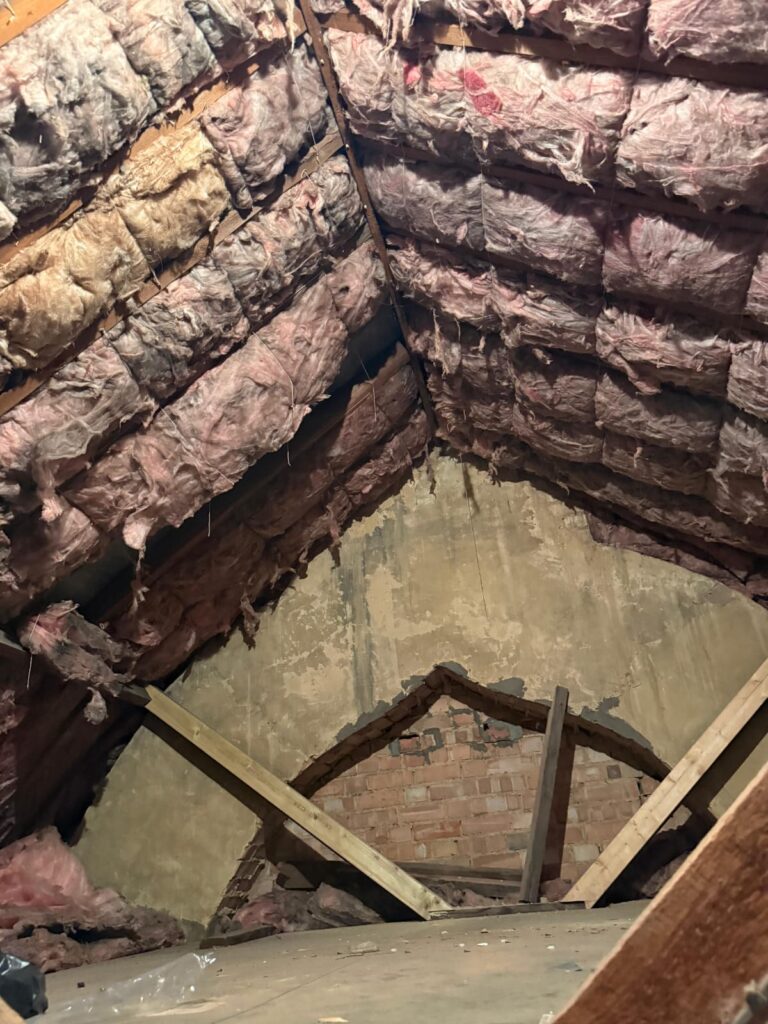
Sealed lofts, floor voids, flat roofs — inaccessible on the day means defaults, even where the insulation is probably fine.
When materials aren’t in the database
Non-standard eco-materials or imported systems that aren’t in the product databases fall back to standard assumptions.
How much do assumed values actually cost you?
Two examples that come up constantly:
- Walls: an unverified wall can default to a poor U-value (for example around 2.1 W/m²K), when the insulated reality might be closer to 0.3 — the software then models several times the real heat loss
- Boilers: an unidentified boiler is assumed to be an old, inefficient unit, even if a modern condensing boiler is on the wall — the efficiency comes from the product database, and no model means no credit
Stack two or three defaults and a genuinely efficient home can land a band or more below where it should — enough to matter for a sale, a green mortgage, or a landlord’s band E obligation.
How do I stop my EPC being penalised by defaults?
- Gather evidence before the visit: installation certificates (CIGA for cavity wall), FENSA for glazing, Building Control sign-offs, boiler make/model and service records, MCS certificates for renewables
- Give access: unlock the loft, clear the hatch, make sure meters and the boiler are reachable
- Walk the assessor through it: tell me what was done and when — I can’t count what I don’t know about, but I can often verify what I’m pointed toward
- If a past EPC used defaults, a reassessment with proper evidence can lift the band without any building work — our EPC improvement recommendations service covers this evidence review, and our hidden-factors guide lists what else to check
Assumed values — quick answers
Why did my EPC record features as “unknown”?
Because the assessor couldn’t see or evidence them on the day. Assessment conventions require unverifiable features to be recorded as unknown, which triggers default assumptions.
Can I fix an EPC that used assumed values?
Yes — a reassessment with documentation (installation certificates, boiler details, FENSA paperwork) replaces defaults with real data, often improving the band with no building work.
What documents should I prepare for an EPC assessment?
Insulation installation certificates, FENSA glazing certificates, Building Control completion documents, boiler make/model and service history, and MCS certificates for solar or heat pumps.
Want your property assessed on evidence, not assumptions? Book online or call 020 3488 4142 — from £59, all 32 London boroughs. ★★★★★ on Google Reviews and rated Excellent on Trustpilot.


Written by Jinoy Jose
DEA Accredited Energy Assessor · EPCRATE, London · Founded 2015
Jinoy Jose is the founder of EPCRATE and an accredited Domestic Energy Assessor (DEA). He has carried out thousands of EPC assessments across all 32 London boroughs since 2015, with NDEA-accredited assessors at EPCRATE covering commercial properties.
Last updated: · About the author →