Written July 2026 by Jinoy Jose, founder of EPCRATE and Domestic Energy Assessor (DEA) — assessing London homes since 2015, across all 32 boroughs. Part L applies to England (Wales and Scotland run their own versions). This guide is general information, not legal or building-control advice.
EPCRATE Services — Quick Links
The short answer: building work today follows the 2021 edition of Part L, in force since June 2022. The Future Homes Standard replaces it for work notified from 24 March 2027 (notified work must start on site by 24 March 2028 to stay on the current rules). Neither version requires any specific EPC band — but the work, and the paperwork it generates, directly affects your next EPC.
Part L is the part of the Building Regulations that decides how energy-efficient building work has to be — and right now it is in an unusual place. The rules that apply to your project today date from 2022, but their replacement has already been published and takes effect on 24 March 2027. At EPCRATE we are seeing the confusion on site every week: homeowners quoting rules that don’t exist yet, and at least one widely-shared claim online (that new homes need an EPC B “from June 2026”) that is simply wrong. This guide sets out what actually applies in 2026, what changes in 2027, and the part most guides skip — what any of it does to your EPC.
What Part L actually is
Part L (“Conservation of fuel and power”) is Schedule 1 of the Building Regulations 2010 for England. The government publishes statutory guidance on how to comply, called Approved Document L, in two volumes: Volume 1 covers dwellings, Volume 2 covers everything else. If you are extending a house in Walthamstow or replacing the windows of a Clapham flat, Volume 1 is the one that matters. Commercial premises follow Volume 2 — a separate subject we cover under commercial EPCs.
Which version applies to your project?
This is the question that trips people up in 2026, because gov.uk now hosts two editions of Approved Document L side by side:
- Work happening now: the 2021 edition (incorporating 2023 amendments), in force since 15 June 2022. The 2023 amendment was narrow — it removed the primary energy factor as a performance standard for homes on heat networks — and nothing further has changed since.
- Work notified from 24 March 2027: the new 2026 edition, renamed “Energy and Greenhouse Gas Emissions”, published on 24 March 2026 as part of the Future Homes Standard package. It is law that has been made but is not yet in force.
The transition rule: if your building notice, full plans or initial notice is submitted to building control before 24 March 2027 and work starts on site before 24 March 2028, the project is assessed under the current 2021 rules — even if it completes after that date. “Starts” has a precise meaning: foundations or drainage going in, not just site clearance — the deadlines are set out in Building Circular 01/2026.
Part L timeline at a glance
15 June 2022 — current rules take effect (ADL 2021 edition)
February 2023 — minor amendment (heat networks)
24 March 2026 — Future Homes Standard published (law made, not yet in force)
24 March 2027 — new standards take effect; notify building control before this date to keep the 2021 rules
24 March 2028 — notified work must have started on site by this date to stay under the 2021 rules
New-build rules today (until March 2027)
A new dwelling doesn’t have to hit one fixed number. Instead, the SAP calculation builds a “notional dwelling” — the same size and shape as the real design, but with a government-specified specification — and the real home must beat it on three counts: primary energy use, CO2 emissions, and fabric energy efficiency. Across the whole build mix this was designed to cut emissions by roughly 31% on average compared with the previous 2013 standards — note “on average”: an individual house simply has to beat its own notional targets.
The notional specification gives a feel for what a compliant 2026 new build looks like: walls around U-value 0.18, floors 0.13, roofs 0.11, windows 1.2 W/m²K, air permeability of 5, a boiler running 55°C flow temperatures, waste-water heat recovery on showers, and a solar array sized at roughly 40% of the ground-floor area divided by 6.5. There are also absolute backstops no element may fall below (walls 0.26, roofs 0.16, windows 1.6) — but in practice a design that only meets the backstops will fail the fabric target. On completion, the same SAP 10.2 calculation that proves compliance also generates the as-built EPC.
Renovating or extending an existing home
Part L is not just for new builds — it bites every time you extend, convert a loft, or replace windows, doors or a roof. The current standards for new and replacement elements in existing dwellings:
- Windows: U-value 1.4 W/m²K or better, or Window Energy Rating Band B. (A temporary easement for timber windows ended on 14 June 2023 — the full standard applies to everything now.)
- Heavily glazed doors: 1.4 or Band C; other external doors: 1.4 or Band B.
- New walls: 0.18 · new roofs: 0.15 · new floors: 0.18.
- A replacement element must never perform worse than the one it replaces.
- Heritage relief exists: in conservation areas and listed buildings — a large slice of London’s stock — appearance can be protected using centre-pane values or secondary glazing instead.
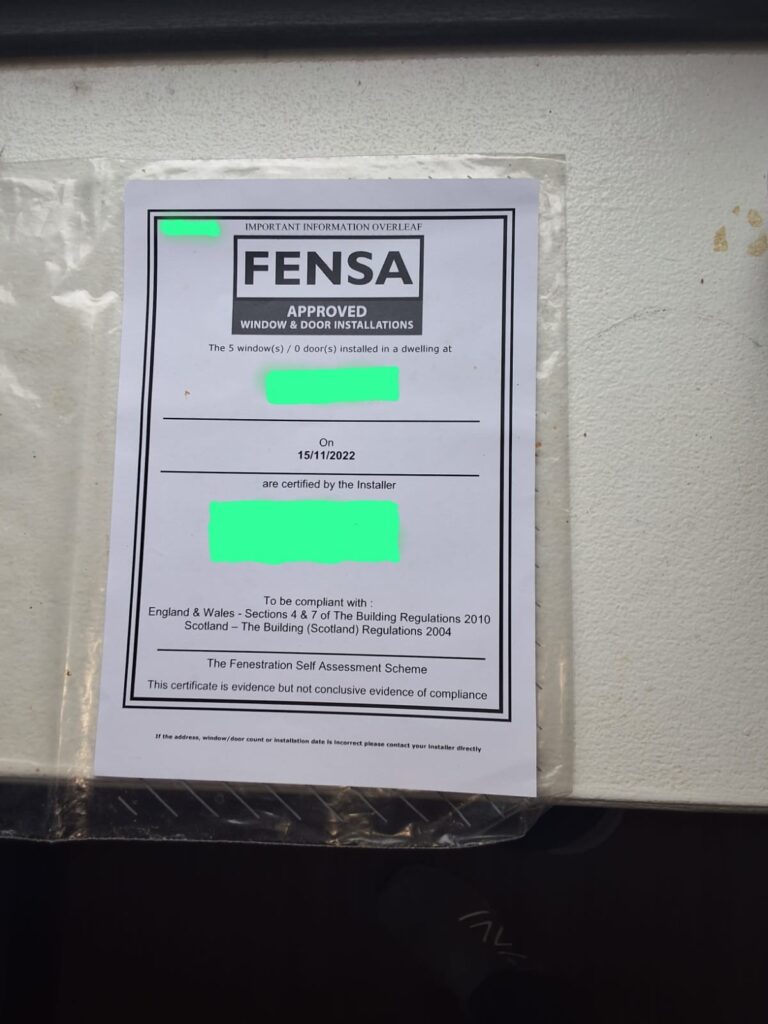
Sign-off comes either from building control or, for windows and doors, from a competent-person scheme such as FENSA or Certass that self-certifies the work. Keep every certificate. When an EPCRATE assessor surveys a Victorian terrace and the owner can produce a FENSA certificate for the double glazing or a building control completion certificate for the extension, that is documentary evidence we can use in the EPC — without it, an assessor has to fall back on age-band assumptions that usually score lower. (And no, an extension on a normal house does not trigger “consequential improvements” — that rule applies to buildings over 1,000 m².)
Documents to keep after Part L work
Whatever the project, keep these — they are the evidence an assessor can actually use at your next EPC, and several also matter when you sell:
- Building control completion certificate (extensions, conversions, structural work)
- FENSA or Certass certificate (windows and doors)
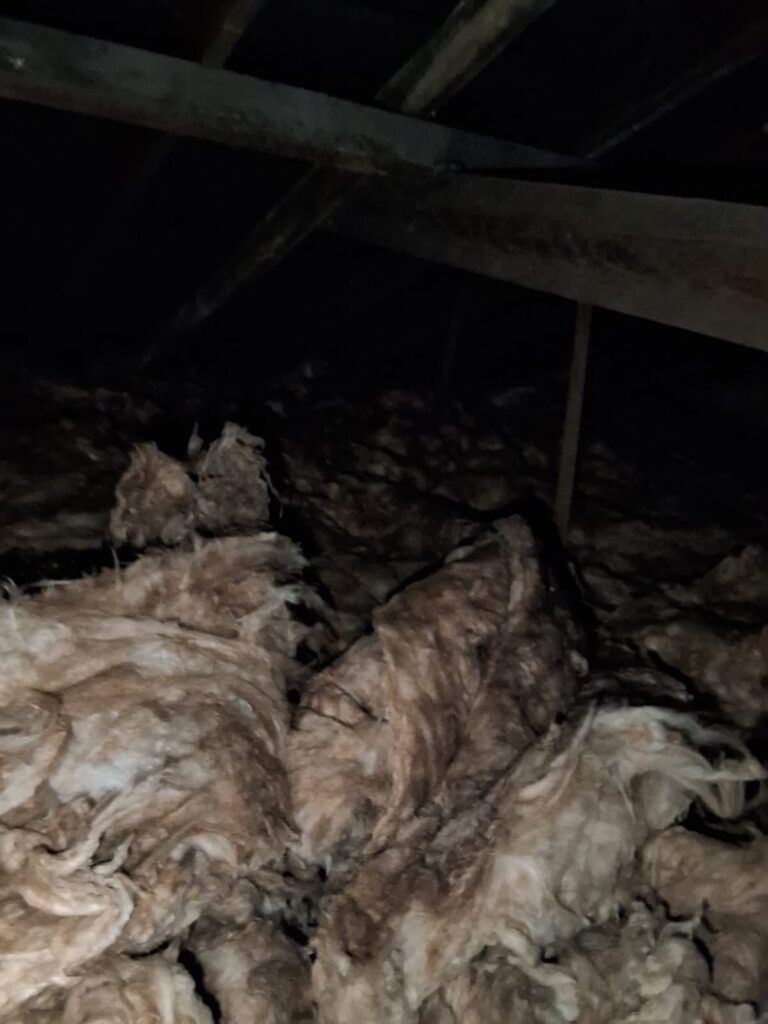
- Insulation invoices and product specifications (thickness and material matter)
- U-value calculations or SAP documents from your builder or architect
- Heat pump commissioning certificate (MCS)
- Solar PV installation certificate (MCS)
- Architect drawings showing constructions and measurements
Bring them to your assessment — and if you are planning improvements first, our EPC recommendations service can help you decide which works actually move the rating.
What changes on 24 March 2027 — the Future Homes Standard
Status first: this law was made on 24 March 2026 and takes effect on 24 March 2027 (24 September 2027 for higher-risk buildings — broadly, residential buildings at least 18 metres tall or with at least seven storeys). Work notified before then is assessed under the current 2021 rules described above. Nothing in this section applies to a project you start today.
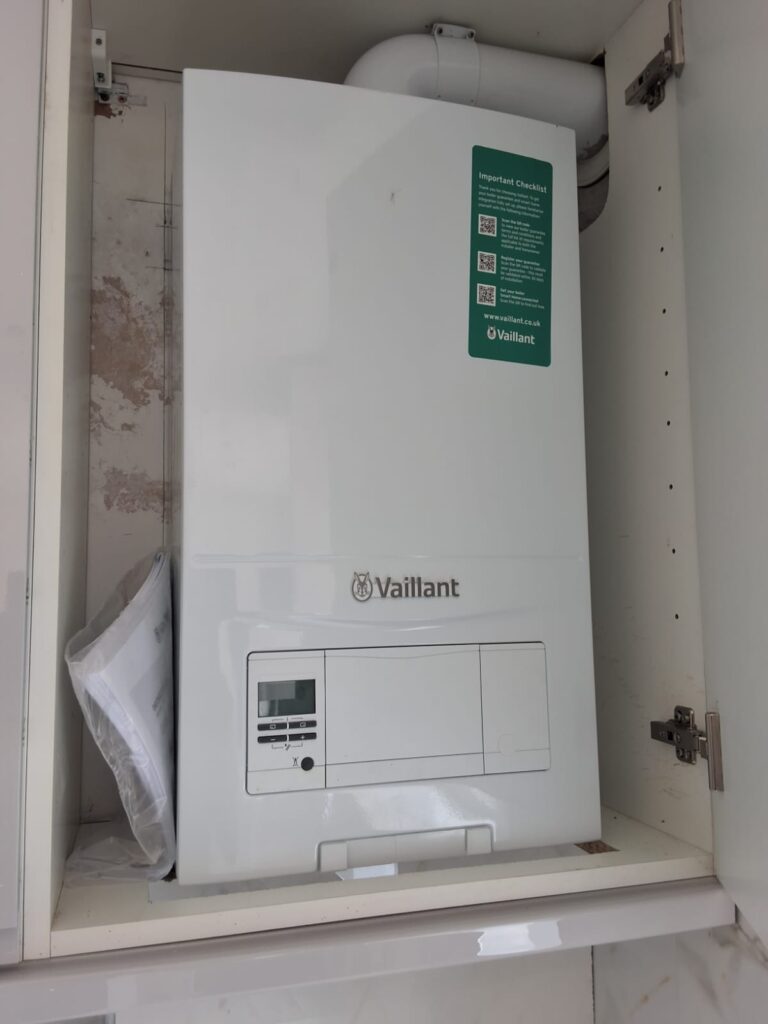
From March 2027, new homes will be assessed against a notional dwelling built around a heat pump (or a connection to a low-carbon heat network). The government’s stated design intent is that the standards are set at a level a gas boiler will not meet in practice. Alongside that, a brand-new requirement arrives: when a building containing a dwelling is erected, it must include a system for generating renewable electricity — in effect, solar panels become part of building regulations rather than a nice-to-have. Per the government’s announcement, homes built to the new standard should emit on average at least 75% less carbon than homes built under the 2013 standards.
Two technical notes worth knowing. The calculation tool for the new standard is SAP 10.3 — the long-trailed “Home Energy Model” replacement for SAP has been delayed and had no confirmed launch date as of July 2026. And despite what some articles claim, none of this sets a mandatory EPC band: there is no rule requiring new homes to reach EPC B “from June 2026”. If you have read that, you have read a misdating of the March 2027 changes — and even those set performance targets, not EPC bands.
Side by side, here is what actually changes for new homes — and what does not:
| Today (2021 edition) | From 24 March 2027 (FHS) | |
|---|---|---|
| Notional heating system | Gas boiler, 55°C flow | Heat pump or low-carbon heat network |
| Renewables on new homes | Solar in the notional spec | Renewable electricity generation required |
| Average carbon saving vs 2013 | Around 31% | At least 75% |
| Calculation tool | SAP 10.2 | SAP 10.3 |
| Mandatory EPC band | No | No |
Does Part L compliance improve your EPC rating?
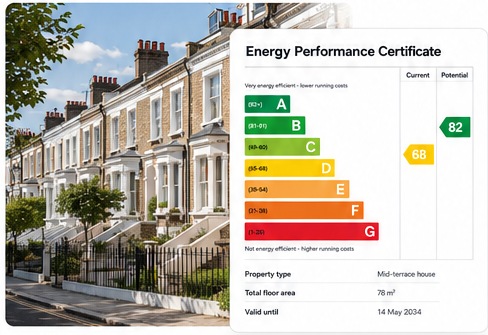
Here is the part almost nobody explains. Part L compliance and your EPC band come out of the same calculation engine but answer different questions. Compliance asks: does this dwelling beat its own notional twin? The EPC asks: what are this home’s modelled energy running costs per square metre? That modelled cost is what becomes the familiar 1–100 score and A–G band. You can pass one and be unimpressive on the other.
We see this most often with extensions. A fully compliant rear extension adds heated volume and, typically, large glazed doors. Every element meets its U-value — and the EPC band still drops a point or two at the next assessment, because the home now has more surface area losing heat and more space to warm. The reverse also happens: Part L-driven works (new glazing, a heat pump, roof insulation) usually do lift the rating — but by how much depends on the whole building, which is why we never promise a specific band from a specific improvement. For existing homes the EPC methodology itself was overhauled in June 2025 (RdSAP 10), and it leans harder than ever on documentary evidence — which is exactly why the certificates from Part L-compliant work matter.
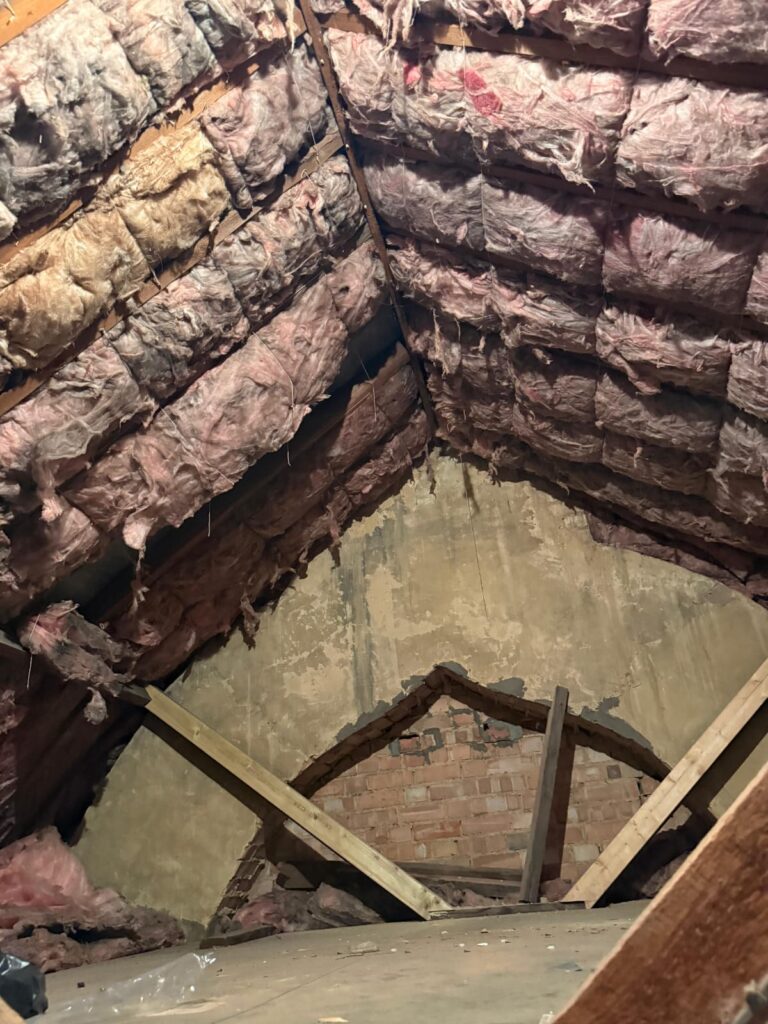
One pattern from our own assessments is worth underlining: the single most common reason a home scores below the owner’s expectation is concealed insulation without evidence. Insulation hidden behind plasterboard, under new flooring or in a converted loft cannot be assumed — without acceptable documentation, RdSAP conventions require us to assess by the property’s age band, which usually scores lower than what is really in the wall. The paperwork in the checklist above is often worth more points than another improvement would be — and if you are weighing up works, start with our guide to improving an EPC rating without overspending.
What to do now
- Just finished building work? Your current EPC may no longer reflect the property — an existing certificate can stay valid for up to ten years, but it won’t show the effect of the works until the home is reassessed. We assess across all 32 boroughs, domestic EPCs from £59, same-day service £90 with the certificate issued on site. Bring your FENSA and building control certificates to the appointment.
- Planning works and want to know the likely effect first? A Draft EPC models the indicative, projected impact of the improvements before you commit — projected, not guaranteed, but far better than guessing.
- Developer with plots either side of March 2027? Get your notification strategy straight now, and line up as-built EPCs for completion.
- Landlord? Part L governs the works; your letting obligations are a separate regime — see our MEES guide for London landlords.
Questions about how planned works would land on your certificate? Call 020 3488 4142 or book an assessment — EPCRATE Group — Greater London Energy Efficiency Awards — Commended 2024 & Highly Commended 2025, rated Excellent on Trustpilot.
Part L & EPC — quick answers
Which Part L applies to my project in 2026?
The 2021 edition (incorporating 2023 amendments), in force since 15 June 2022. The new 2026 edition only applies to work notified to building control from 24 March 2027.
Does Part L compliance guarantee a good EPC rating?
No. Compliance means beating your dwelling’s notional targets; the EPC band measures running cost per square metre. A compliant extension can even lower a band slightly. The two use the same calculation but answer different questions.
When does the Future Homes Standard take effect?
24 March 2027 for most building work in England (24 September 2027 for higher-risk buildings). Work notified before 24 March 2027 — and started on site before 24 March 2028 — stays under the current 2021 rules. It does not require any specific EPC band.
Do replacement windows have to meet U-value 1.4?
Yes — new and replacement windows in existing dwellings must achieve U-value 1.4 W/m²K or Window Energy Rating Band B, with relief available for listed buildings and conservation areas via centre-pane values or secondary glazing.
Do I need a new EPC after a loft conversion or extension?
There is no law forcing an immediate new EPC — but your existing certificate will not reflect the changes, and if you sell or re-let, an up-to-date EPC that includes the new space (with its building control evidence) almost always presents the property better.
Can concealed insulation be counted without evidence?
Usually not. If insulation cannot be seen or documented, RdSAP conventions require the assessor to use the property’s age-band assumptions. Invoices, building control sign-off or photographs taken during the work can all help — keep them.
Does Part L apply to listed buildings?
Yes, but with relief: where meeting the full standards would unacceptably alter a listed building or conservation-area property’s character, special considerations apply — for example centre-pane U-values or secondary glazing for windows. Building control or your conservation officer confirms what is reasonable case by case.


Written by Jinoy Jose
DEA Accredited Energy Assessor · EPCRATE, London · Founded 2015
Jinoy Jose is the founder of EPCRATE and an accredited Domestic Energy Assessor (DEA). He has carried out thousands of EPC assessments across all 32 London boroughs since 2015, with NDEA-accredited assessors at EPCRATE covering commercial properties.
Last updated: · About the author →