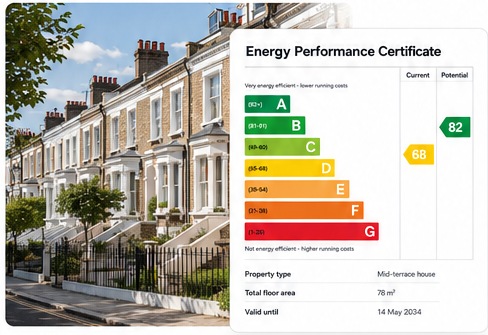

Landlords ask me this at the end of an assessment more often than you’d think — usually after an older property has come back F or G and the improvement list looks daunting. The good news: if your property genuinely qualifies, registering an exemption is free and takes under half an hour online. The bad news: an exemption you never registered doesn’t protect you at all. Here’s the process, step by step.
EPCRATE Services — Quick Links
Where do I register an EPC exemption?
On the government’s PRS Exemptions Register (search “PRS Exemptions Register” on gov.uk). It’s a self-service portal — you create an account, select the exemption type, upload your evidence and submit. There’s no fee. The register is public, so anyone — including your local authority’s enforcement team — can check what you’ve claimed.
Which EPC exemption types can I register?
These are the MEES exemptions for rented property, each with its own evidence requirements:
- All improvements made — every relevant improvement has been done and the property still can’t reach band E (valid 5 years)
- High cost — no improvement can be made because reaching band E would exceed the £3,500 cost cap (inc VAT); needs three installer quotes (valid 5 years)
- Wall insulation unsuitability — cavity, external or internal wall insulation would damage the property; needs written expert advice (valid 5 years)
- Third-party consent refused — a tenant, freeholder, superior landlord or planning authority has refused permission (valid 5 years or until the consent issue ends)
- Property devaluation — an independent surveyor confirms the works would reduce the property’s value by more than 5% (valid 5 years)
- New landlord — you’ve recently become the landlord in specific circumstances (valid 6 months only, to give you time to comply)
What evidence do I need to register?
It depends on the type, but expect to provide: a copy of the current EPC, the improvement recommendations, installer quotes (three for the high-cost route), written expert or surveyor reports where required, and any refusal letters for the consent route. From experience: the registrations that get challenged are the ones with thin evidence — do it properly once.
Step-by-step: registering the exemption
- Confirm the property actually fails — check the current EPC and its recommendations. If the certificate is old or you’ve since improved the property, a fresh assessment may show you don’t need an exemption at all.
- Gather the evidence for your exemption type — quotes, reports, refusals.
- Create an account on the PRS Exemptions Register via gov.uk.
- Select the exemption type, enter the property and landlord details, upload the evidence.
- Submit and save the confirmation — note the date; most exemptions expire after five years and don’t renew automatically.
Do I really need an exemption — or just a better assessment?
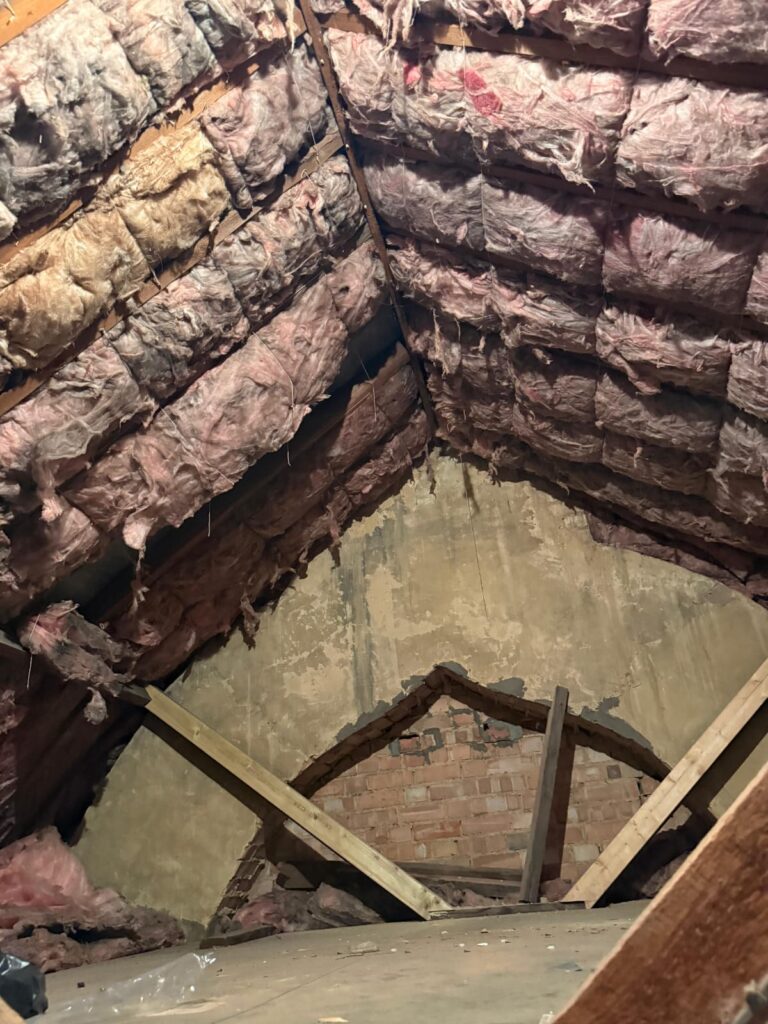
Honest answer from an assessor: a meaningful share of the F/G properties I’m asked about don’t need an exemption — they need their evidence sorted. Unverified insulation, an unidentifiable boiler or missing glazing paperwork all force default assumptions that drag the rating down. Before you build an exemption case, it’s worth a Draft EPC: it models your realistic band and shows whether a modest improvement within the £3,500 cap gets you to E — which is cheaper and cleaner than maintaining an exemption. Our guide to who qualifies for EPC exemptions covers the qualifying rules in more detail.
What happens if I let an F or G property without a registered exemption?
Penalties of up to £5,000 per property, plus publication of the breach on the public register. London boroughs do enforce this — and because the register is public, “I thought I was exempt” isn’t a defence if nothing was ever filed. The full letting rules are in our MEES compliance guide.
EPC exemption registration — quick answers
How much does it cost to register an EPC exemption?
Nothing — the PRS Exemptions Register is free. Your costs are the evidence: quotes, surveys or expert reports.
How long does an exemption last?
Five years for most types; six months for the new-landlord exemption. They don’t renew automatically.
Can I register an exemption before the property fails an EPC?
You need a current EPC showing F or G first — the exemption is registered against the certificate’s recommendations.
Need the assessment side sorted first? Book online or call 020 3488 4142 — all 32 London boroughs. Rated ★★★★★ on Google Reviews and rated Excellent on Trustpilot.


Written by Jinoy Jose
DEA Accredited Energy Assessor · EPCRATE, London · Founded 2015
Jinoy Jose is the founder of EPCRATE and an accredited Domestic Energy Assessor (DEA). He has carried out thousands of EPC assessments across all 32 London boroughs since 2015, with NDEA-accredited assessors at EPCRATE covering commercial properties.
Last updated: · About the author →