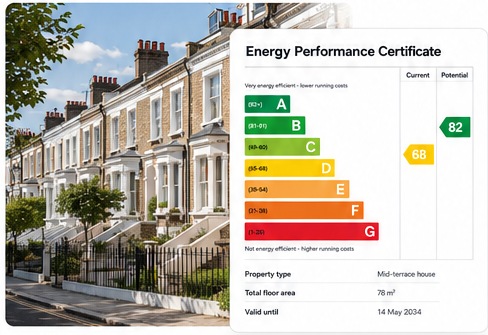

“Do I actually need an EPC for this?” — I hear that question weekly, from landlords, sellers and commercial owners alike. Sometimes the answer really is no. But the exemption rules are precise, and claiming one the wrong way is worse than not claiming at all. Here’s how the exemptions actually work, question by question.
EPCRATE Services — Quick Links
What is an EPC exemption?
An EPC exemption means a property can legally be sold, let or leased without an EPC — or without meeting the Minimum Energy Efficiency Standards (MEES) that normally apply to rentals. The catch most people miss: most exemptions must be registered on the PRS Exemptions Register before they protect you. An exemption you never registered is, for enforcement purposes, no exemption at all.
Which properties are exempt from needing an EPC?
The main categories I come across:
- Listed buildings and conservation areas — only where improvements would unacceptably alter the building’s character. This is not automatic; I’ve written a full guide on EPCs for listed buildings
- Temporary buildings — in use for two years or less
- Places of worship — buildings used for religious activities
- Certain industrial sites and workshops — with low energy demand for heating or cooling
- Buildings due for demolition — where planning consent to demolish is in place
- Some short-term and holiday lets — under specific letting conditions
- MEES “all improvements made” — every relevant improvement has been done and the property still can’t reach band E
What are the MEES cost-cap exemptions landlords miss?
Two of the most useful rental exemptions are cost-based, and in my experience they’re the ones landlords don’t know exist. If getting your property to band E would cost more than the £3,500 cost cap, you can register a high-cost exemption. And if you’ve made all the relevant improvements within that cap and the rating still won’t reach E, the all-improvements-made exemption applies. Before spending anything, a Draft EPC shows exactly where your property lands against that cap — I’ve had landlords discover they qualified for an exemption before spending a pound, and others discover £600 of work would get them to E comfortably.
How do I claim an EPC exemption?
- Go to the PRS Exemptions Register on gov.uk
- Provide supporting evidence — planning restrictions, quotes or reports
- Submit your landlord and property details
- Keep the confirmation and exemption reference number
Exemptions last five years, and they need renewing or updating when circumstances change — a new tenancy or new works can change the picture.
What happens if I claim an exemption without registering it?
Penalties of up to £5,000 per property, a tenancy that may be challenged, and delays to any sale or letting while it’s untangled. If you’re not certain your property qualifies, have it assessed first — it’s the cheapest step in the whole process.
Who can help me check if my property qualifies?
EPCRATE helps landlords, agents and owners across all 32 London boroughs stay compliant without paying for works they don’t need. Book a local assessor, check pricing, or call 020 3488 4142. Rated ★★★★★ on Google Reviews and Trustpilot.
EPC exemptions — quick answers
Do all EPC exemptions need to be registered?
Most rental (MEES) exemptions must be registered on the PRS Exemptions Register to be valid. An unregistered exemption can still attract penalties.
How long does an EPC exemption last?
Five years in most cases, after which it must be renewed or updated if circumstances change.
What is the penalty for getting an exemption wrong?
Up to £5,000 per property, plus possible challenges to the tenancy and delays to any sale or letting.


Written by Jino Jose
DEA Accredited Energy Assessor · EPCRATE, London · Founded 2015
Jino Jose is the founder of EPCRATE and an accredited Domestic Energy Assessor (DEA). He has carried out thousands of EPC assessments across all 32 London boroughs since 2015, with NDEA-accredited assessors at EPCRATE covering commercial properties.
Last updated: · About the author →