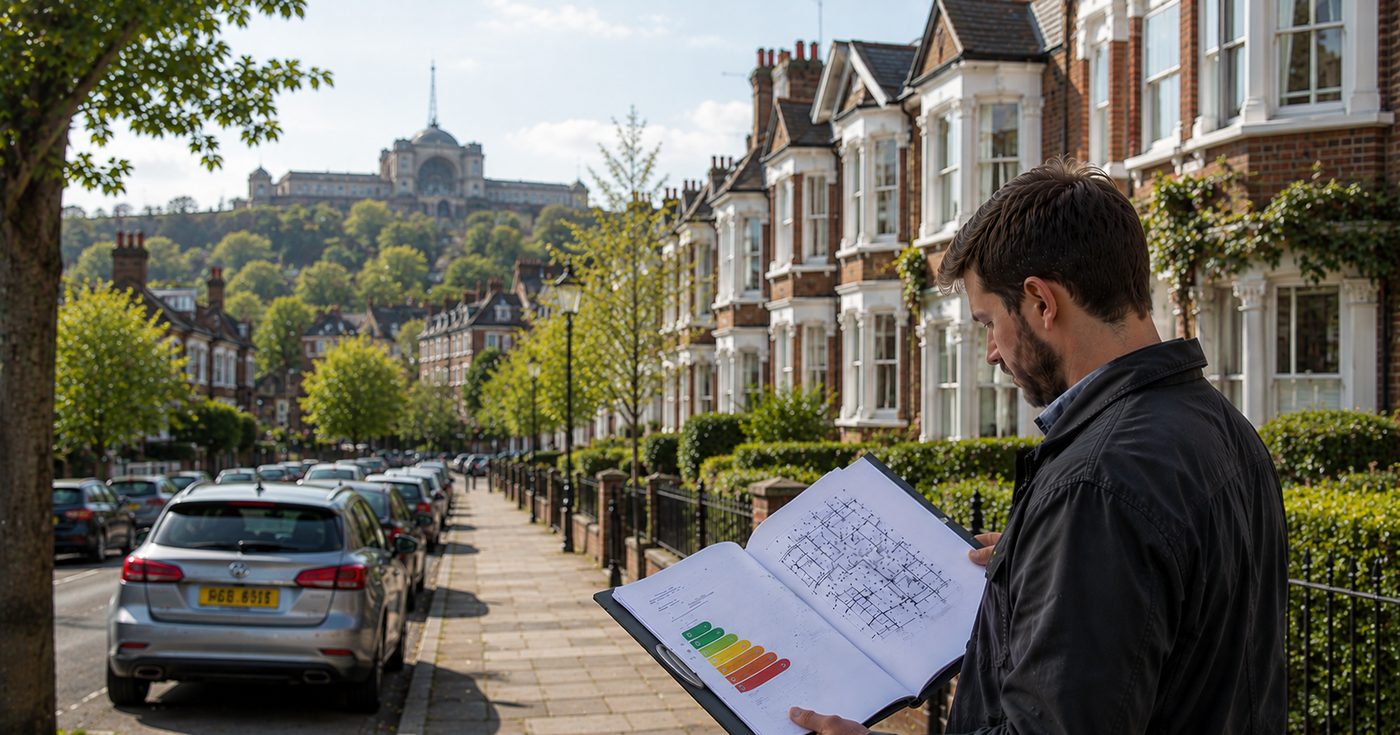
The short answer: most domestic EPC assessments take 20–90 minutes on site — roughly 20–40 minutes for a studio or small flat, 40–60 for a standard house or apartment, and 60–90 minutes or longer for a large or complex home. Commercial assessments run from about an hour to several hours.
EPCRATE Services — Quick Links
The certificate itself is lodged separately once the data is checked, and same-day appointments can have it issued on site. Everything below explains what happens during that visit, and what makes it quicker.
In 2026, Energy Performance Certificates (EPCs) remain an important part of selling, renting, leasing and managing property. They provide useful information about energy efficiency, estimated running costs, carbon emissions and potential improvement recommendations.
If you are preparing to sell a house, let a flat, arrange a commercial lease or update property compliance records, you may be wondering how long an EPC takes and what actually happens during the assessment.
This refreshed guide explains the EPC process from booking to certification, covering both domestic and commercial properties, with practical advice for London homeowners, landlords, estate agents and property investors.
Founded in 2015 by Jinoy Jose, EPCRATE provides Domestic EPCs, Commercial EPCs, Floor Plans and Draft EPC reviews across London, with fast appointments available where possible.
What Is an EPC?
An Energy Performance Certificate measures the energy efficiency of a property and gives it a rating from A to G, with A being the most efficient and G being the least efficient.
An EPC typically includes:
- Energy efficiency rating.
- Environmental impact information.
- Estimated energy performance information.
- Carbon emissions data.
- Recommendations that may help improve energy efficiency.
Domestic EPCs generally remain valid for 10 years from the date they are issued.
EPCs are commonly required when selling, renting or leasing many types of property. Landlords and commercial property owners should also review current requirements relating to Minimum Energy Efficiency Standards (MEES) where applicable.
How Long Does a Domestic EPC Take?
Most domestic EPC assessments are completed during a relatively short appointment, although the exact time depends on the property size, layout and accessibility.
| Property Type | Typical Assessment Time |
|---|---|
| Studio or small flat | Approximately 20–40 minutes |
| Standard house or apartment | Approximately 40–60 minutes |
| Large or complex home | Approximately 60–90 minutes or longer |
After the assessment, the certificate is usually processed and lodged once the required information has been checked and entered into approved software.
Same-day or next-day EPC services may be available depending on assessor availability, property access and assessment complexity.
What Happens During a Domestic EPC Assessment?
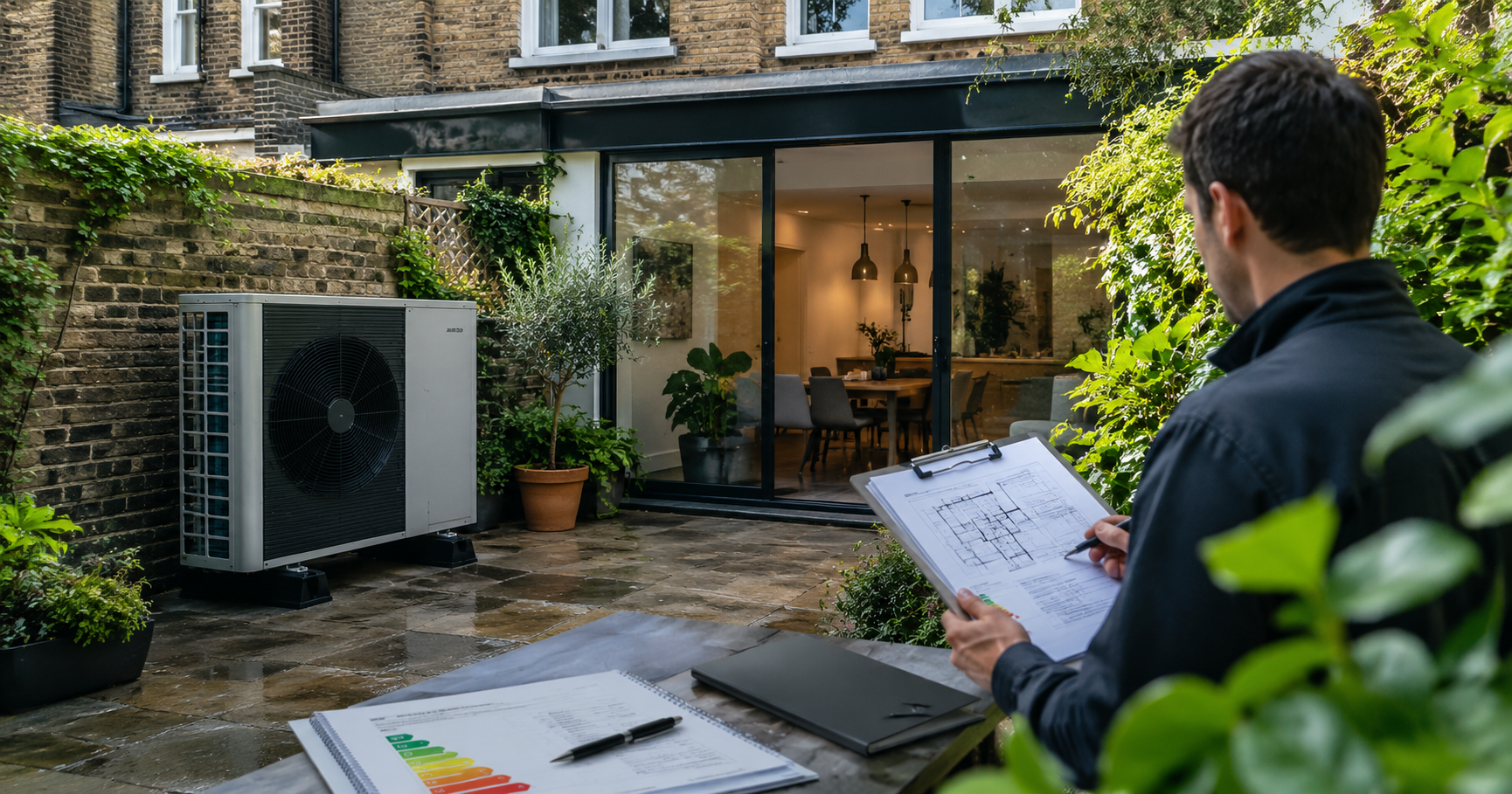
A Domestic EPC assessment is non-invasive. The assessor does not drill holes, lift floorboards or damage the property.
During the visit, the assessor records information about:
- Property dimensions.
- Wall construction.
- Roof construction.
- Floor construction where relevant.
- Windows and glazing.
- Heating systems and controls.
- Hot water systems.
- Fixed lighting.
- Insulation where visible or supported by evidence.
- Renewable technologies where present and evidenced.
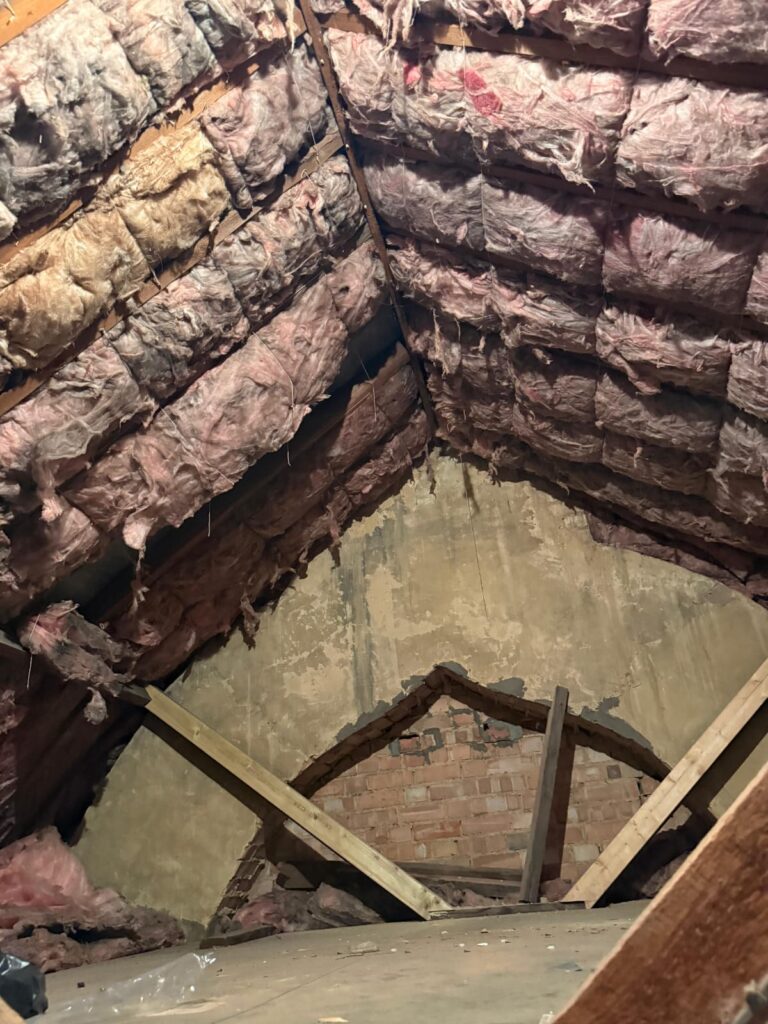
The assessor will usually need access to all relevant rooms, heating equipment, loft areas where accessible and any parts of the property required to complete the assessment.
What Should You Prepare Before the EPC Assessment?
Good preparation can help the assessment proceed more smoothly and may reduce delays caused by missing documents or inaccessible areas.
Before the appointment, property owners should consider preparing:
- Heating system manuals.
- FENSA certificates for replacement windows.
- Building Control approvals.
- Insulation certificates.
- MCS certificates for renewable technologies.
- Solar PV or heat pump documentation.
- Floor plans where available.
Where qualifying improvements cannot be visually confirmed, suitable supporting evidence may help ensure features are appropriately reflected where assessment methodologies and conventions allow. Our guide to what evidence can improve EPC accuracy explains this in detail.
Why Supporting Evidence Matters
One of the most common reasons EPC results are disputed is missing or incomplete evidence.
Assessors must follow approved assessment conventions and cannot always record improvements based on verbal confirmation alone.
For example, if wall insulation, floor insulation, glazing upgrades or heating improvements are not visible, documentation may be required before they can be included appropriately. For concealed measures such as floor or internal wall insulation, documentary evidence is typically needed — usually Building Control sign-off, or where that was never obtained, appropriate documentation from the builder or architect’s drawings, with invoices as supporting backup.
Providing evidence does not guarantee a particular EPC rating, but it may help ensure eligible property features are considered correctly within the assessment process.
What Happens After the Assessment?
After the site visit, the assessor enters the collected property information into approved EPC software.
The software calculates the property’s energy performance rating and produces the certificate.
The final EPC will show:
- Current EPC rating.
- Potential future rating.
- Energy performance information.
- Carbon emissions data.
- Recommended improvement measures.
Once completed and lodged, the certificate appears on the official EPC register.
How Long Does a Commercial EPC Take?
Commercial EPC assessments are usually more detailed than domestic assessments because non-domestic buildings can vary significantly in size, use and complexity. EPCRATE’s commercial EPC assessments are carried out by accredited Non-Domestic Energy Assessors (NDEA).
| Commercial Property Type | Typical Assessment Time |
|---|---|
| Small office or shop | Approximately 1–2 hours |
| Medium commercial premises | Approximately 2–3 hours |
| Large or complex building | Several hours or longer |
Commercial EPCs may involve reviewing building zones, HVAC systems, lighting, insulation, glazing, occupancy patterns and other building services.
Certificate turnaround depends on the complexity of the building and the information available.
What Happens During a Commercial EPC Assessment?
Commercial EPC assessments are carried out using approved non-domestic assessment methodologies.
The assessor may need to review:
- Building layout and floor areas.
- Heating, ventilation and air conditioning systems.
- Lighting systems.
- Building fabric.
- Hot water systems.
- Renewable technologies.
- Plant rooms and service areas.
- Building zoning and usage.
For commercial properties, floor plans, mechanical and electrical specifications, lighting schedules and HVAC documentation may help the assessment proceed more efficiently.
Factors That Affect EPC Assessment Duration
The time required for an EPC assessment can vary depending on several factors.
- Property size: Larger properties usually take longer to measure and assess.
- Layout complexity: Extensions, converted flats and mixed-use layouts can require additional time.
- Heating systems: Multiple systems, communal heating or complex controls may require more detailed recording.
- Access: Locked rooms, inaccessible lofts or restricted plant rooms can delay assessments.
- Documentation: Clear supporting evidence can help avoid uncertainty.
- Commercial complexity: Large non-domestic buildings may require additional review and modelling time.
EPC Assessments for Flats and Apartments
London contains a large number of flats and apartments, including purpose-built blocks, converted Victorian flats, leasehold apartments and modern developments. See our guide to EPCs for flats in London.
Flat assessments may involve additional considerations such as:
- Communal heating systems.
- Leasehold restrictions.
- Shared building fabric.
- Management company documentation.
- Floor location.
- Converted property layouts.
Each self-contained flat is usually assessed individually where an EPC is required for sale or rent.
EPC Assessments Before Mortgaging or Remortgaging
Many homeowners and landlords review their EPC position when applying for a mortgage or remortgage, especially after completing improvement works.
Some lenders offer Green Mortgage products linked to stronger EPC ratings, although eligibility varies between lenders and products.
If improvements have been completed since the last EPC was issued, a new assessment may provide a more up-to-date reflection of the property’s energy performance.
No EPC assessment can guarantee a mortgage outcome, lender acceptance or Green Mortgage eligibility.
Planning Improvements Before Your EPC?
If you are considering insulation upgrades, heating improvements, refurbishment works or a property purchase, EPCRATE’s Draft EPC service can help you better understand your property’s current position before committing significant expenditure.
A Draft EPC review can help identify available evidence, explore potential improvement pathways and support informed decision-making.
However, a Draft EPC does not guarantee a specific EPC rating, compliance outcome, mortgage outcome or improvement result.
Common Misconceptions About EPC Assessments
Myth 1: EPCs are just paperwork
An EPC provides useful information about energy performance and may be required for property sale, letting and compliance purposes.
Myth 2: A domestic EPC assessment takes all day
Most domestic assessments are completed within a relatively short visit, depending on the property.
Myth 3: Improvements are always automatically reflected
Some improvements may require supporting evidence before they can be appropriately recorded under assessment conventions.
Myth 4: Commercial EPCs are the same as domestic EPCs
Commercial EPC assessments use different methodologies and are usually more detailed due to building size, usage and services.
Example Assessment Timelines
Domestic Example
A 3-bedroom house in London with accessible heating systems, visible loft access and supporting documentation may be assessed within around 45–60 minutes, depending on layout and complexity.
The certificate may then be processed after the required data has been entered and checked.
Commercial Example
A medium office building in Canary Wharf or Stratford may require several hours on site depending on access, layout, HVAC systems and available documentation.
Commercial EPC turnaround depends on building complexity and the information required for modelling.
Benefits of a Smooth EPC Assessment
- Faster property marketing preparation.
- Reduced delays for estate agents and landlords.
- Better use of supporting evidence.
- More efficient compliance planning.
- Clearer understanding of potential improvement recommendations.
Related: what an EPC costs in London.
Need one booked? See what an EPC costs in London, our full EPC pricing, or book an assessment — domestic EPCs from £59, same-day £90 with the certificate issued on site.
Why Choose EPCRATE?
- Founded in 2015 by Jinoy Jose, DEA accredited.
- NDEA-accredited assessors for commercial properties.
- Rated Excellent on Trustpilot.
- ★★★★★ Google Reviews.
- Domestic and Commercial EPC specialists.
- Draft EPC review service available.
- EPC and Floor Plan Bundle services.
- Coverage across all London boroughs.
- Greater London Energy Efficiency Awards – Commended 2024.
- Greater London Energy Efficiency Awards – Highly Commended 2025.
Frequently Asked Questions
How long does a domestic EPC assessment take?⌄
Most domestic EPC assessments take approximately 20–90 minutes depending on property size, layout and access.
How long does a commercial EPC assessment take?⌄
Commercial EPC assessments may take from around 1 hour to several hours depending on the size and complexity of the building.
How quickly can I receive my EPC?⌄
Turnaround depends on assessor availability, property complexity and processing requirements. Same-day or next-day service may be available where possible.
What documents should I prepare for an EPC assessment?⌄
Useful documents may include FENSA certificates, insulation records, Building Control approvals and renewable technology certificates.
Can a Draft EPC help before improvement works?⌄
Yes. A Draft EPC review can help property owners understand their current position, review evidence and explore potential improvement pathways before committing expenditure.
Need an EPC in London?
EPCRATE provides Domestic EPCs, Commercial EPCs, Floor Plans and Draft EPC reviews across all London boroughs. Next-day appointments are available from £59, with urgent same-day inspections from £90 (certificate issued on site) subject to availability.
- Domestic EPC appointments available.
- Commercial EPC assessments across London.
- EPC and Floor Plan Bundles available.
- Draft EPC Reviews for landlords, investors and homeowners.
Call 020 3488 4142 to discuss your property, or book your EPC assessment online.
Related guides: how long an EPC certificate lasts · what happens if it expires before completion.


Written by Jinoy Jose
DEA Accredited Energy Assessor · EPCRATE, London · Founded 2015
Jinoy Jose is the founder of EPCRATE and an accredited Domestic Energy Assessor (DEA). He has carried out thousands of EPC assessments across all 32 London boroughs since 2015, with NDEA-accredited assessors at EPCRATE covering commercial properties.
Last updated: · About the author →