
If you own, manage, lease or invest in commercial property, understanding the Commercial Energy Performance Certificate (EPC) process is an important part of property compliance and transaction planning.
EPCRATE Services — Quick Links
Whether you are selling a building, granting a new lease, refinancing an asset or reviewing portfolio performance, a valid Commercial EPC may be required and obtaining one early can help avoid unnecessary delays.
This guide focuses on Commercial EPC costs, the assessment process and typical timelines, and how property owners can prepare for a smoother assessment.
Founded in 2015 by Jinoy Jose, EPCRATE provides Commercial EPCs, Domestic EPCs, Floor Plans and Draft EPC Reviews across London.
What Is a Commercial EPC?
A Commercial Energy Performance Certificate measures the energy efficiency of a non-domestic building and provides a rating from A (most efficient) to G (least efficient). It applies to offices, retail units, warehouses, restaurants, industrial units, hotels and mixed-use commercial properties. For a full explanation of what a commercial EPC is and when it is required, see our guide to what a commercial EPC is.
How Much Does a Commercial EPC Cost?
Commercial EPC pricing varies significantly because commercial buildings differ greatly in size, complexity and usage.
Factors that commonly influence cost include:
- Total floor area.
- Number of floors.
- Building complexity.
- HVAC systems.
- Lighting zones.
- Property use class.
- Access requirements.
Small retail units and offices are generally simpler to assess than multi-storey buildings, industrial sites or mixed-use developments.
Because every building is different, EPCRATE’s commercial EPC pricing starts from £140 and is quoted on the specific property rather than a fixed national rate. Call 020 3488 4142 for a quote based on your building.
What Happens During a Commercial EPC Assessment?
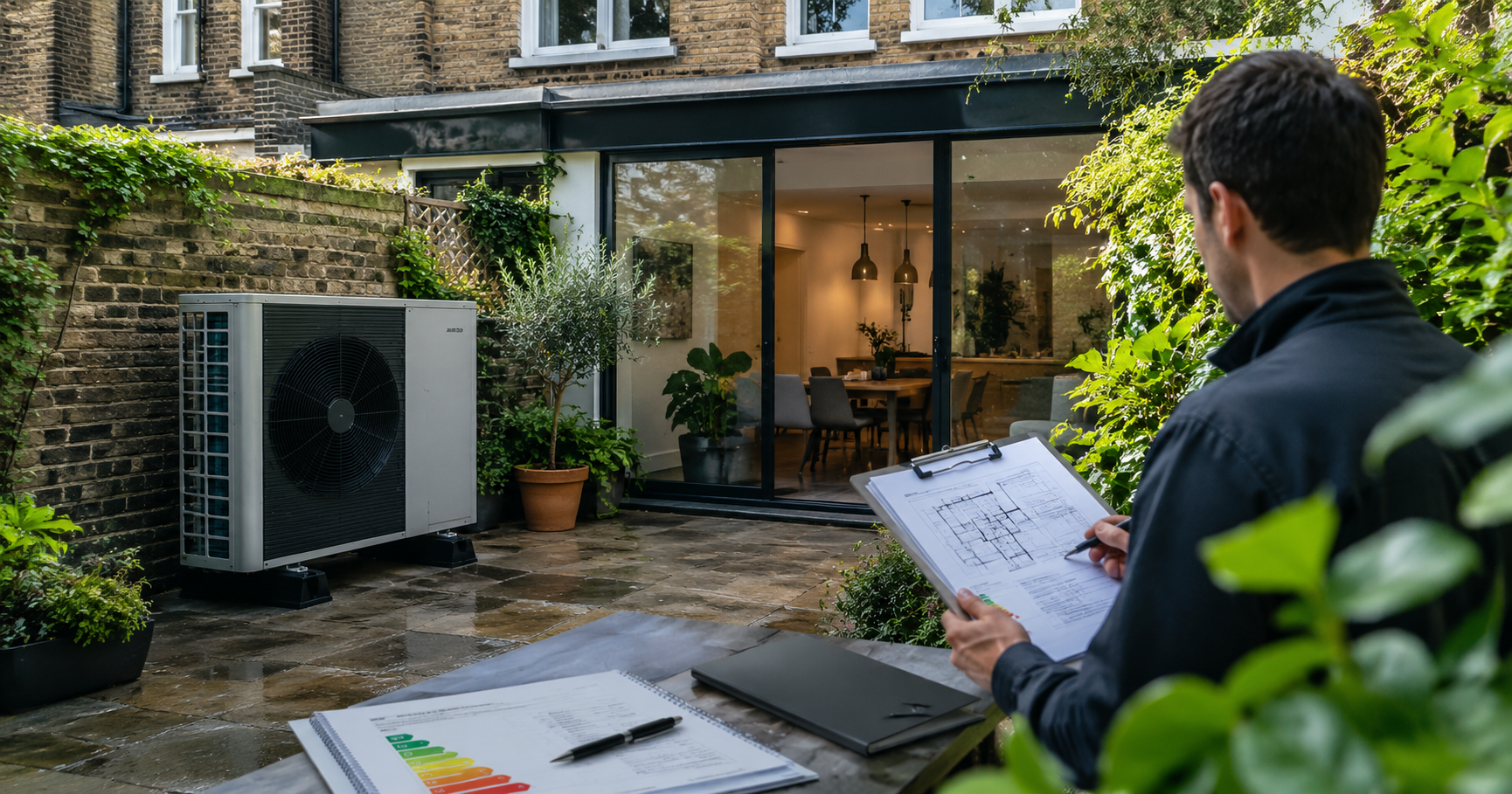
A qualified Non-Domestic Energy Assessor (NDEA) visits the property and records information relating to:
- Heating systems.
- Cooling systems.
- Ventilation systems.
- Hot water systems.
- Lighting.
- Building fabric.
- Renewable technologies.
- Building dimensions and layout.
The assessor then uses approved software to model the building and generate the EPC. Depending on the building type, methodologies may include SBEM or other approved modelling approaches.
How Long Does a Commercial EPC Assessment Take?
The assessment duration depends on the size and complexity of the building.
| Property Type | Typical Assessment Time |
|---|---|
| Small retail unit | Approximately 1 hour |
| Small office | 1–2 hours |
| Medium commercial property | 1–3 hours |
| Large or complex building | Several hours or longer |
Properties with multiple floors, complex HVAC systems or extensive plant equipment may require additional time. For a wider overview, see our guide on how long an EPC takes.
How Long Does It Take to Receive the EPC?
After the site inspection has been completed, the assessor processes the data using approved software and lodges the certificate on the national register.
Typical turnaround times vary depending on building complexity and assessor workload.
Many straightforward commercial EPCs can be completed within a few working days, while larger or more complex buildings may require longer.
Commercial EPC Timeline
| Stage | Typical Timescale |
|---|---|
| Booking appointment | Subject to assessor availability |
| Property inspection | Same day as appointment |
| Modelling and calculations | Following inspection |
| Certificate lodgement | Upon completion of assessment |
Urgent appointments may be available depending on location and scheduling.
What Documents Can Help the Assessment?
Providing supporting documentation can help improve efficiency and may assist the assessor in accurately reflecting building features where assessment methodologies permit.
Useful documents may include:
- Floor plans.
- Mechanical and electrical specifications.
- HVAC documentation.
- Lighting schedules.
- Building control records.
- Refurbishment documentation.
- Renewable technology certificates.
- Building management system information.
Commercial buildings often contain systems that are difficult to assess visually without supporting documentation. See our guide to what evidence can improve EPC accuracy.
How Long Is a Commercial EPC Valid?
A Commercial EPC generally remains valid for 10 years from the date it is issued.
However, many property owners choose to obtain a new EPC following significant refurbishment works or major building upgrades.
Examples include:
- HVAC replacement.
- Major lighting upgrades.
- Solar PV installations.
- Building fabric improvements.
- Significant layout changes.
Commercial EPCs and MEES Compliance
Many rented commercial properties are subject to Minimum Energy Efficiency Standards (MEES).
Landlords should regularly review:
- EPC validity.
- Current EPC rating.
- Exemption status.
- Future lease events.
Understanding EPC performance early can help landlords plan improvements and reduce compliance risks. Our guide to commercial EPC penalties and compliance covers enforcement.
Common Causes of Delays
Commercial EPC assessments are often delayed because access is unavailable to key areas.
Examples include:
- Locked plant rooms.
- Restricted roof access.
- Unavailable tenants.
- Missing documentation.
- Restricted access to service areas.
- Unavailable building managers.
Preparing access in advance can help streamline the assessment process.
Can You Improve a Commercial EPC Rating?
Depending on the building, potential improvement measures may include:
- LED lighting upgrades.
- Heating control improvements.
- HVAC optimisation.
- Insulation improvements.
- Renewable technologies.
- Building management systems.
No improvement guarantees a specific EPC rating because outcomes depend on the building, available evidence and approved assessment methodology.
How a Draft EPC Review Can Help
Many commercial property owners undertake improvement works without fully understanding how those changes may influence EPC outcomes.
EPCRATE’s Draft EPC Review service can help:
- Review current EPC performance.
- Identify available supporting evidence.
- Explore potential improvement pathways.
- Support budgeting decisions.
- Assist refurbishment planning.
However, a Draft EPC Review does not guarantee a future EPC rating, compliance outcome, financing outcome or improvement result.
Why Choose EPCRATE?
- Founded in 2015 by Jinoy Jose, DEA accredited.
- NDEA-accredited assessors for commercial EPCs.
- Rated Excellent on Trustpilot.
- ★★★★★ Google Reviews.
- Commercial EPC specialists.
- Coverage across all London boroughs.
- Draft EPC Review Service available.
- EPC & Floor Plan Bundles available.
- Greater London Energy Efficiency Awards – Commended 2024.
- Greater London Energy Efficiency Awards – Highly Commended 2025.
Related: what a commercial EPC covers · pricing for small vs large units.
Commercial EPC price by floor area
These are our standard London commercial EPC prices, banded by the building’s total useful floor area. The exact figure is confirmed against size and complexity before the visit:
| Total floor area | Price |
|---|---|
| Up to 40 m² | £140 |
| 40 – 100 m² | £165 |
| 100 – 200 m² | £185 |
| 200 – 300 m² | £200 |
| 300 – 500 m² | £225 |
| 500 – 750 m² | £250 |
| 750 – 1,000 m² | £275 |
| 1,000 – 2,000 m² | £300 |
| 2,000 – 4,000 m² | £350 |
| Over 4,000 m² | Quoted on enquiry |
Commercial assessments are carried out by Laurence James Powell, a Non-Domestic Energy Assessor accredited with ECMK at Levels 3 and 4 (Assessor ID ECMK307288) — a separate accreditation from the domestic DEA qualification — and every certificate is lodged on the official GOV.UK register. Full service detail on our commercial EPC page.
Frequently Asked Questions
How much does a Commercial EPC cost?⌄
Costs vary depending on the building size, complexity, systems and access requirements. EPCRATE’s commercial EPC pricing starts from £140 and is quoted individually per property.
How long does the assessment take?⌄
Assessment times vary from around one hour for small properties to several hours for larger or more complex buildings.
How long does a Commercial EPC remain valid?⌄
Commercial EPCs generally remain valid for 10 years from the date of issue.
Can I obtain a new EPC after refurbishment?⌄
Yes. Many property owners commission updated EPCs after significant improvement works to better reflect the building’s current performance.
Can a Draft EPC Review guarantee compliance?⌄
No. Draft EPC Reviews support planning and decision-making but cannot guarantee any future outcome.
Book Your Commercial EPC in London
EPCRATE provides commercial EPC assessments by accredited NDEA assessors across all 32 London boroughs, from £140 depending on the size and complexity of the building.
Call 020 3488 4142 for a quote on your commercial property, or book online.
Final Thoughts
Commercial EPCs play an important role in property transactions, compliance planning and asset management. Understanding the process, preparing documentation and reviewing EPC performance early can help reduce delays and support better property decisions.


Written by Jinoy Jose
DEA Accredited Energy Assessor · EPCRATE, London · Founded 2015
Jinoy Jose is the founder of EPCRATE and an accredited Domestic Energy Assessor (DEA). He has carried out thousands of EPC assessments across all 32 London boroughs since 2015, with NDEA-accredited assessors at EPCRATE covering commercial properties.
Last updated: · About the author →