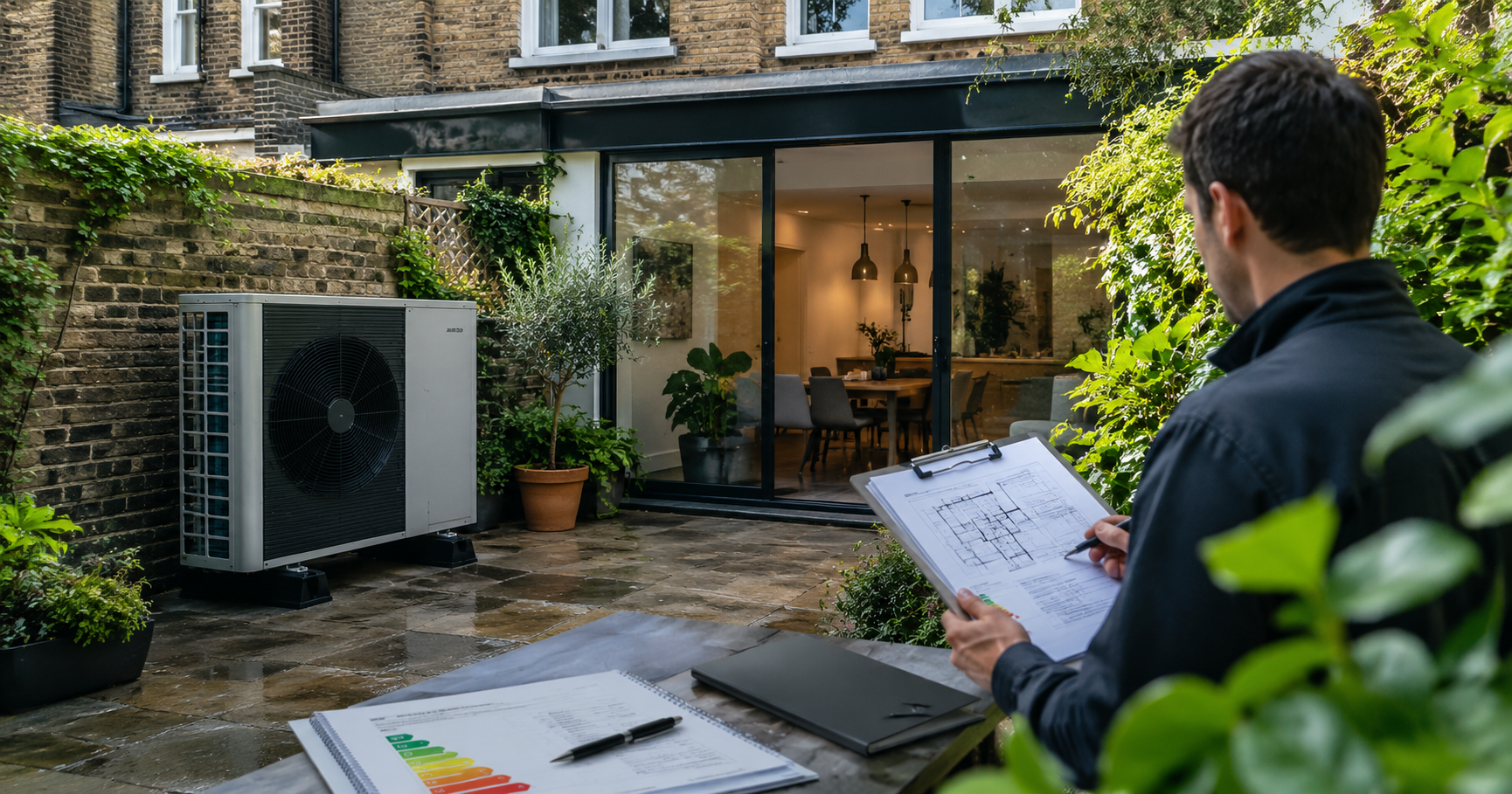

Nobody expects the certificate to get worse after spending fifty grand on the house. But I’ve assessed plenty of freshly extended London homes where exactly that happened — the owner added space and value, and the EPC band dropped. It’s common enough that I think of it as the extension trap, and it’s entirely avoidable if you know why it happens.
EPCRATE Services — Quick Links
Why can an extension lower an EPC rating?
An EPC measures how efficiently the whole property uses energy. An extension increases the heated volume and the external surface area — more space to heat, more envelope to lose heat through. Unless the new part is built to a noticeably higher standard than the original house, the recalculated average can come out lower. The usual culprits:
- New walls, floor or roof insulated only to the minimum
- Big glazed areas — bifolds and rooflights — adding heat-loss surface
- The existing boiler now heating a larger volume it wasn’t sized for
- Extra junctions and thermal bridging where new meets old
- Basic lighting and no heating controls in the new rooms
How much can the rating drop?
It depends on the property, but as an illustration: a mid-terrace sitting comfortably in band C gains a rear extension with minimum-spec insulation, a large glazed opening and a radiator spurred off the existing boiler. The recalculation adds significant heating demand with little efficiency gain — and the property can slip into band D. For homeowners that’s market appeal; for landlords near the band E line it can become a MEES compliance issue on the next certificate.
What is the “worst-performing element” effect?
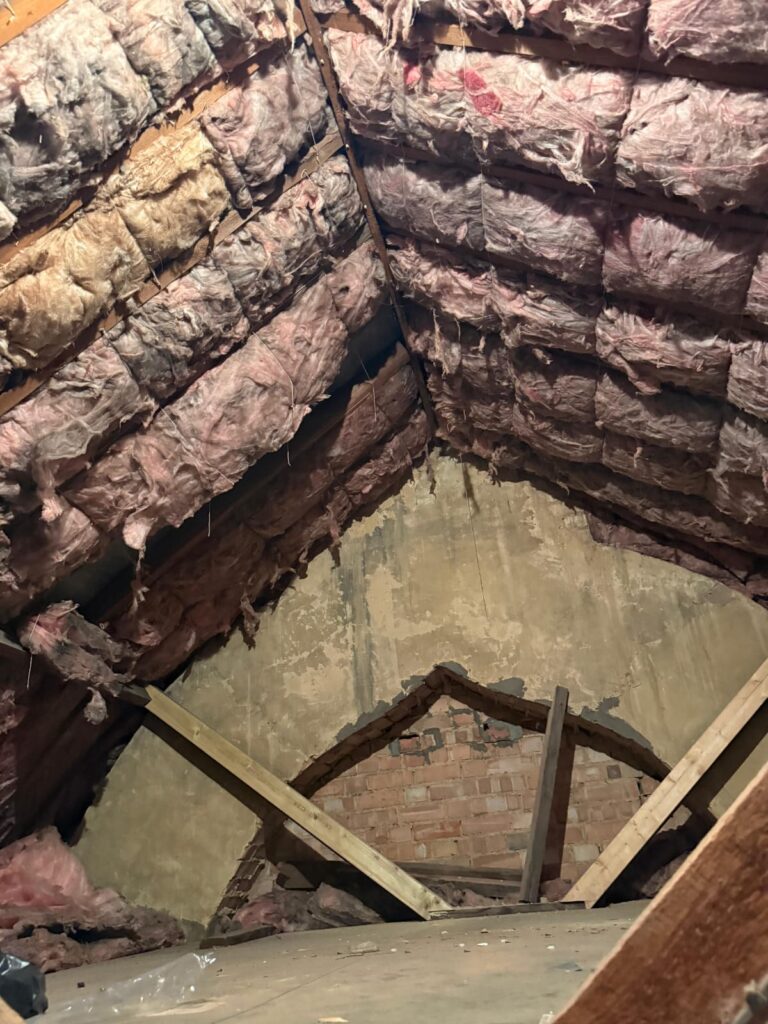
The calculation doesn’t just average — a section that performs significantly worse than the rest (an under-insulated extension roof, a single-skin garden-room wall) disproportionately drags the result, because the software models the real heat loss through that element. Even a well-insulated main house can’t fully offset a poor add-on bolted to the back of it.
How do I extend without hurting my EPC?
Insulate beyond the minimum
Building Regulations set a floor, not a target. Going beyond minimum U-values in the new fabric is cheap at build stage and impossible to retrofit cheaply later.
Spec the glazing properly
Large glazed openings are fine — with good units. Ask for the U-values, keep the paperwork.
Check the heating serves the new volume
A boiler sized for the original house plus one radiator off the circuit is the classic shortcut. Zoned controls and properly sized emitters keep the calculation (and the comfort) right.
Light it efficiently and keep every certificate
Low-energy lighting throughout, and a folder with the Building Control sign-off, insulation specs and glazing documentation — on assessment day, evidence is the difference between real values and defaults.
Planning an extension — when should I think about the EPC?
At design stage, not after completion. If the property is rented or you’ll sell soon, model the impact before you build: a Draft EPC shows where the current rating stands and how the planned works would shift it, while the spec can still be adjusted for a few hundred pounds rather than remedially for thousands.
Extensions and EPCs — quick answers
Do I need a new EPC after an extension?
Not automatically — but your existing EPC no longer reflects the property, and at the next sale or letting the new assessment will include the extension, for better or worse.
Can an extension improve my EPC?
Yes — a well-insulated extension built beyond minimum standards, with efficient glazing, heating and lighting, can lift the whole property’s rating.
Why did my EPC drop after renovating?
Usually because the new space added heating demand without matching efficiency — under-spec insulation, big glazing, or an unadapted heating system — or because the works weren’t documented for the assessor.
Extending, or assessing after works? Book online or call 020 3488 4142 — from £59, all 32 London boroughs. ★★★★★ on Google Reviews and rated Excellent on Trustpilot.


Written by Jinoy Jose
DEA Accredited Energy Assessor · EPCRATE, London · Founded 2015
Jinoy Jose is the founder of EPCRATE and an accredited Domestic Energy Assessor (DEA). He has carried out thousands of EPC assessments across all 32 London boroughs since 2015, with NDEA-accredited assessors at EPCRATE covering commercial properties.
Last updated: · About the author →