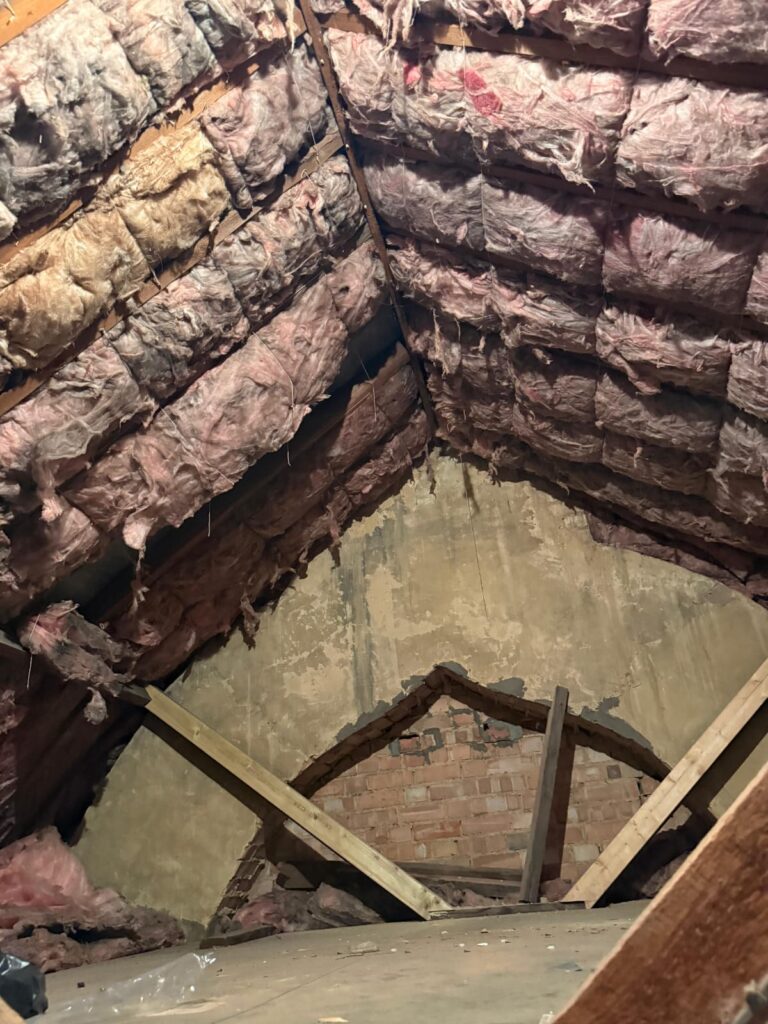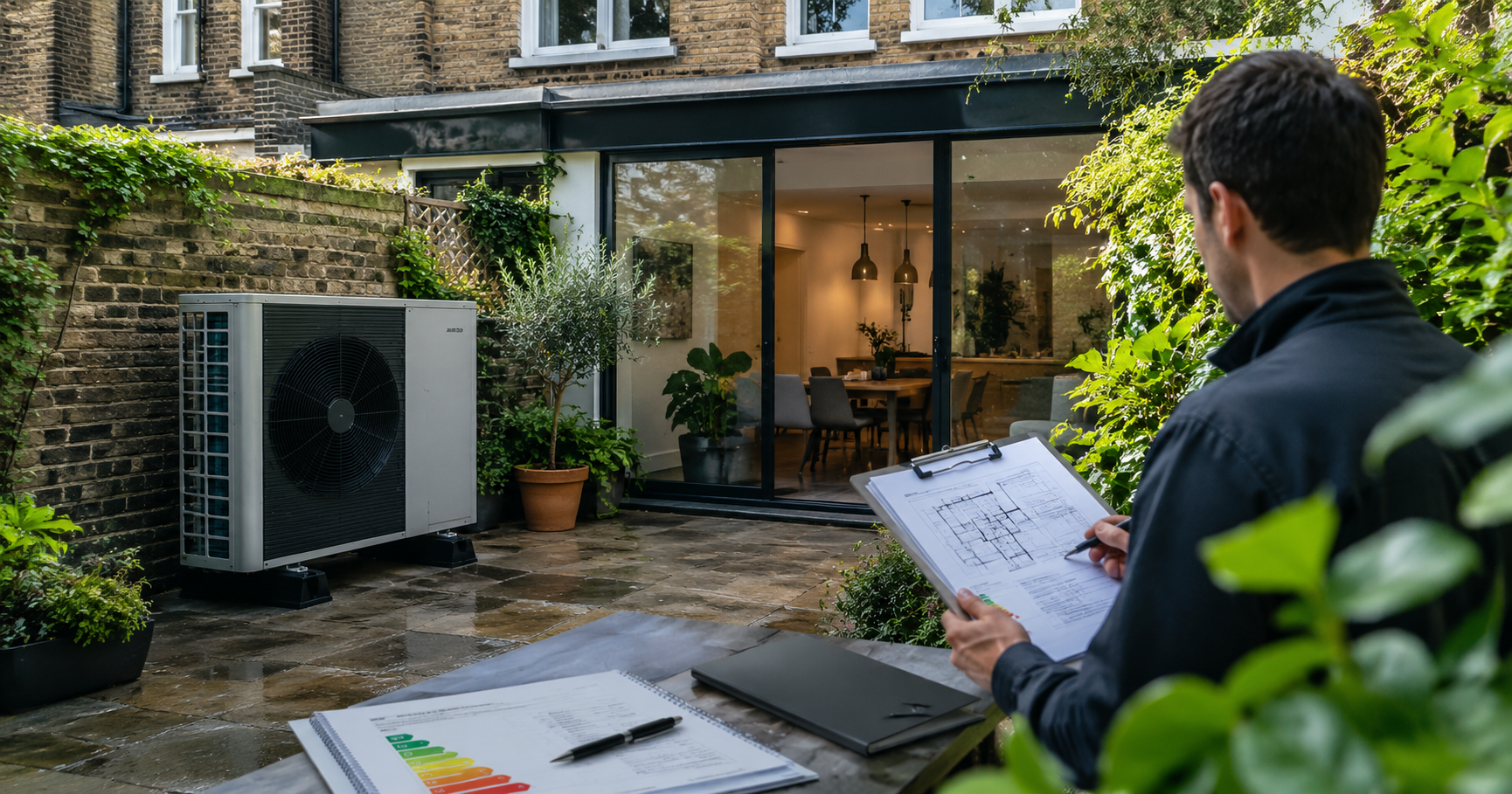

A landlord with a shop below and a flat above once asked me why he needed two different certificates from two different assessment routes for one building. Fair question — and the answer explains most of what’s different between commercial and residential EPCs. Both rate a building A to G, both last ten years, but under the surface they’re separate systems.
EPCRATE Services — Quick Links
How is a commercial EPC assessed differently from a residential one?
The calculation method is the big one:
- Residential EPCs use SAP or, for existing homes, RdSAP — a standardised model built around dwellings, carried out by a domestic energy assessor (DEA)
- Commercial EPCs use SBEM (Simplified Building Energy Model), or full Dynamic Simulation Modelling for complex buildings — carried out by a non-domestic energy assessor
The qualifications don’t cross over: a domestic assessor can’t lodge a commercial certificate or vice versa. At EPCRATE, domestic assessments are carried out by Jinoy Jose (DEA-accredited), and commercial assessments are handled at company level under NDEA accreditation — see our commercial EPC service.
Why is commercial EPC data collection more involved?
A home has one heating system, some glazing and a loft. A commercial unit might have zoned HVAC, refrigeration, different lighting circuits per area, and activity zones with completely different energy profiles — a kitchen behaves nothing like an office. The assessor has to map those zones, which is why commercial surveys take longer and why commercial EPCs cost more (from £140 with us, versus from £59 domestic — see pricing).
Do the legal requirements differ?
The core duty is the same — a valid EPC when a building is sold, let or newly built. Differences worth knowing:
- Display requirement: public buildings over 250m² occupied by public authorities must display their certificate prominently — there’s no equivalent for homes
- Minimum standard: both rented homes and rented commercial buildings currently need band E, but the penalty regimes differ — domestic breaches carry up to £5,000 per property, while commercial penalties scale with rateable value up to £150,000
- Future trajectory: for homes, EPC C by 2030 is proposed; for commercial, the proposed direction is band B by 2030 — both are proposals, not yet law
Is the validity period the same?
Yes — ten years for both. And the same practical advice applies to both: after a major refurbishment, the improved performance only helps your marketability or compliance once a new certificate records it.
Which EPC do I need for a mixed-use building?
Usually both — which brings us back to my shop-and-flat landlord. A self-contained flat above a commercial unit needs its own residential EPC; the commercial space needs a commercial one. Where the parts aren’t self-contained, it gets case-specific — worth a phone call before booking anything: 020 3488 4142.
Commercial vs residential EPCs — quick answers
Can a domestic EPC assessor do a commercial EPC?
No — commercial certificates require a non-domestic energy assessor using SBEM, a separate accreditation from the domestic (RdSAP) route.
Are commercial EPCs more expensive than residential?
Yes, because the survey and modelling are more complex. Ours start from £140 commercial versus £59 domestic.
Do commercial and residential EPCs last the same time?
Yes — ten years each, though renewing after major upgrades is recommended so the register reflects the improvement.
Need either certificate in London? Book online or call 020 3488 4142. EPCRATE — Greater London Energy Efficiency Awards, Commended 2024 and Highly Commended 2025; ★★★★★ on Google Reviews and rated Excellent on Trustpilot.
Who carries out the assessment: our commercial EPCs are produced by Laurence James Powell, a Non-Domestic Energy Assessor accredited with ECMK at Levels 3 and 4 (Assessor ID ECMK307288) — non-domestic work requires this accreditation, which is separate from the domestic DEA qualification. Prices start at £140 and are banded by floor area; the full table is on our commercial EPC page.


Written by Jinoy Jose
DEA Accredited Energy Assessor · EPCRATE, London · Founded 2015
Jinoy Jose is the founder of EPCRATE and an accredited Domestic Energy Assessor (DEA). He has carried out thousands of EPC assessments across all 32 London boroughs since 2015, with NDEA-accredited assessors at EPCRATE covering commercial properties.
Last updated: · About the author →