
Insulation, boilers and glazing get all the attention in EPC conversations — air leakage almost never comes up until someone asks why their carefully sealed home didn’t score better. The honest answer: an air tightness test only helps your EPC in specific situations, and in others it makes no difference at all. Here’s how to tell which side you’re on before paying for one.
EPCRATE Services — Quick Links
What is an air tightness (blower door) test?
A fan is temporarily sealed into the main doorway, the building is pressurised and depressurised, and the equipment measures how quickly air leaks through gaps, cracks and junctions. The output is a measured air permeability figure (m³/h·m² at 50Pa), which can be used in the energy calculation instead of an assumption.
How does air tightness affect an EPC rating?
Uncontrolled air leakage is heat loss — it feeds directly into the heating demand the software calculates. When no measured result is available, the assessment uses default air leakage assumptions, and — as with everything default in an EPC — those assumptions are conservative. A measured result that beats the default improves the calculation; that’s the entire mechanism.
When does a blower door test actually make a difference?
New builds chasing an A or B
New homes assessed under full SAP benefit most — air tightness testing is part of Building Regulations sign-off anyway, and a strong result can be the difference between a B and an A.
Deep retrofits with deliberate air-sealing work
If you’ve invested in draught-proofing, membranes and careful detailing, a measured result is the way to make that invisible work count rather than being assessed on age-based assumptions.
Larger detached properties
More exposed surface means more leakage paths — bigger homes have more to gain from proving they’re tighter than the default.
Complex builds — extensions, dormers, conversions
Junction-heavy buildings tend to be assumed leaky. Measurement can beat the assumption where the detailing was done well.
When is an air tightness test NOT worth it for an EPC?
Two common cases where I’d tell you to save the money:
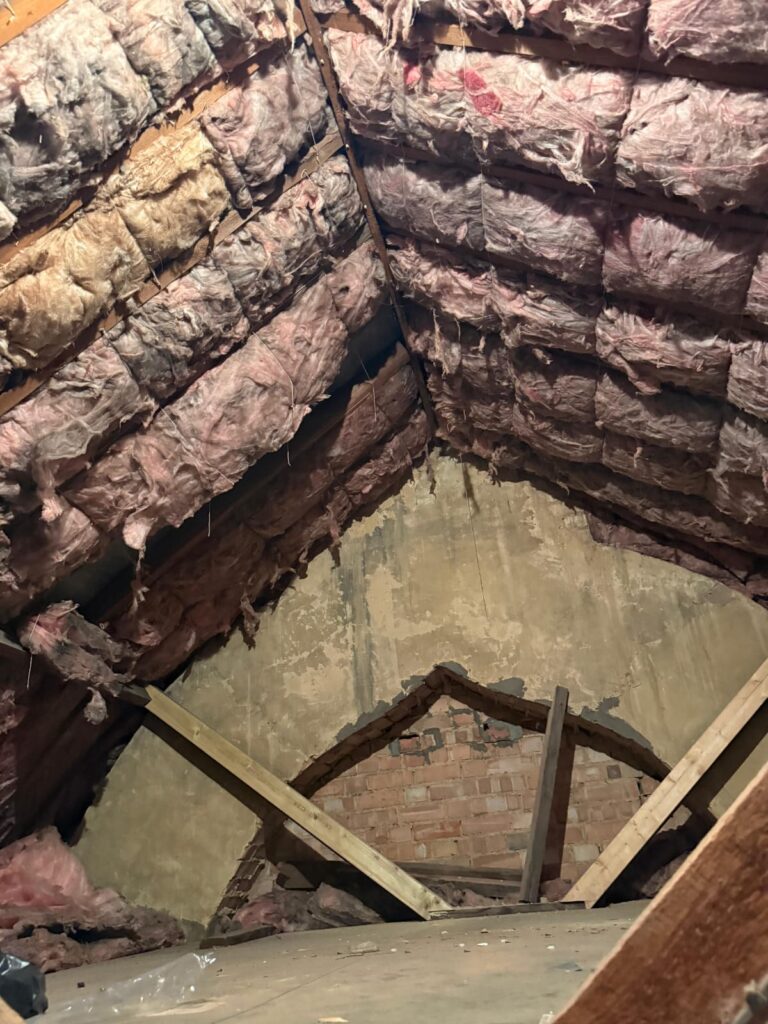
- Poorly insulated properties — if the walls and roof are leaking heat, air tightness is a rounding error. Fix the fabric first: our guide on insulation and building fabric covers the priorities.
- Standard existing homes assessed under RdSAP — the reduced-data method for existing dwellings works largely from the property’s age and type, so a test result often can’t be used the way owners hope. For most London terraces and flats, evidence of insulation and heating matters far more.
Flats in blocks also gain little — surrounded by other heated dwellings, they’re already treated as sheltered.
What should I do instead if my EPC seems low?
In order of value for a typical existing home: sort the documentation (insulation certificates, boiler model, FENSA), fix the genuinely weak fabric elements, and only then think about measurement niceties. A Draft EPC models which of these would actually move your band — before you spend on tests or works.
Air tightness and EPCs — quick answers
Does an air tightness test improve an EPC rating?
It can — mainly for new builds and deep retrofits where a measured result beats the default assumption. For standard existing homes it usually makes little difference.
Is a blower door test required for an EPC?
No. It’s required for new-build Building Regulations compliance, but a standard domestic EPC doesn’t need one.
What helps an existing home’s EPC more than air tightness?
Evidence: insulation certificates, boiler identification and glazing paperwork — followed by fabric improvements like loft and wall insulation.
Want an assessor’s view on what would move your rating? Book online or call 020 3488 4142 — all 32 London boroughs. ★★★★★ on Google Reviews and rated Excellent on Trustpilot.


Written by Jinoy Jose
DEA Accredited Energy Assessor · EPCRATE, London · Founded 2015
Jinoy Jose is the founder of EPCRATE and an accredited Domestic Energy Assessor (DEA). He has carried out thousands of EPC assessments across all 32 London boroughs since 2015, with NDEA-accredited assessors at EPCRATE covering commercial properties.
Last updated: · About the author →