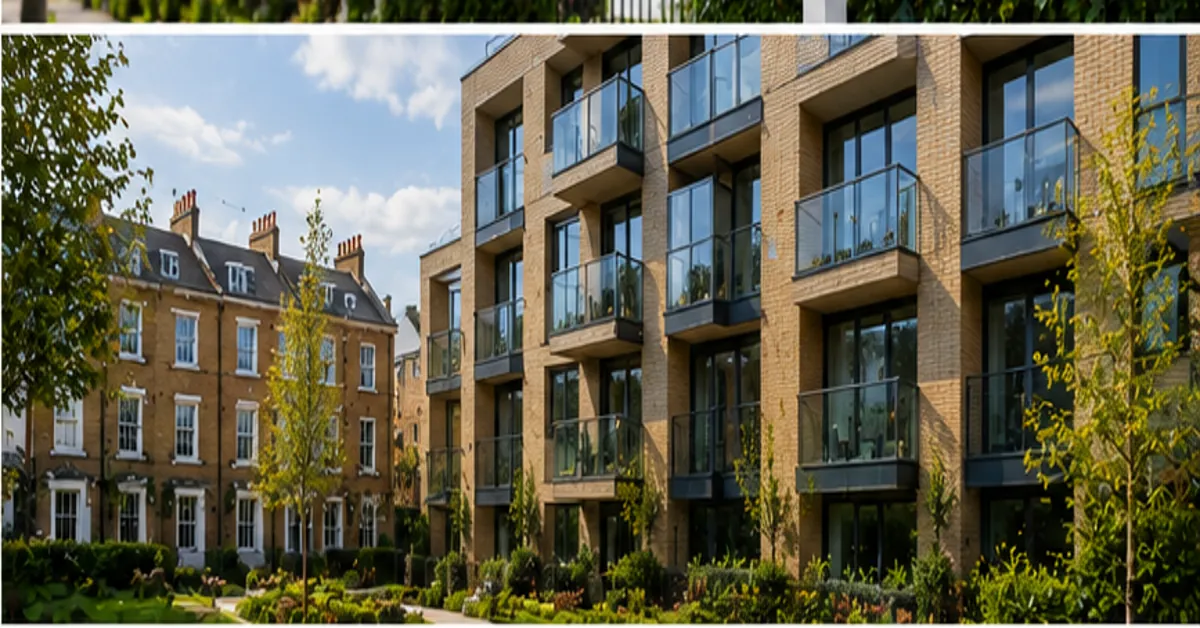
An EPC is required whenever a property is built, sold, or rented, Before you advertise your house for sale or rent, you must get an EPC for potential buyers and tenants.
Is it necessary to create an EPC for each apartment or flat separately?
“A reference to a building” includes “a reference to a section of a structure that has been planned or changed to be utilised independently,” according to the EPC standards. As a result, even if a building is divided into sections (or units), only one EPC will be required if the property may only be marketed and sold as a whole. If, on the other hand, portions (or units) of the same building are sold independently, separate EPCs are required. The most important consideration is whether each portion (or unit) of a structure has its own or shared heating system.
EPCRATE Services — Quick Links
Separate heating systems
In this case, an EPC must be created for each portion (or unit) based on that part’s (or unit’s) energy usage; however, if the parts are similar, this may be done based on a representative part (or unit) in the same block. In the instance of a structure including numerous components (or units) but with, say, four different design types, four EPCs would be required, all other factors being equal.
Common heating systems
An EPC must still be created for each portion (or unit) with a shared heating system, but it may be based on a single certification of the entire building as a whole.
Example 1: care homes
Only on the construction, sale, or renting of the entire facility would a care home require an EPC. (The entire building EPC would be based on SBEM, the non-dwellings assessment technique.)
In most cases, residents will not be required to acquire an EPC. The home’s lodging, which is given with attendant services but does not include exclusive control of any portion of the building, is not normally considered a letting for which an EPC is required.
Example 2: sheltered housing
Sheltered housing, on the other hand, usually has self-contained apartments that are either rented or owned, with common facilities for social and recreational activities that are controlled by the conditions of the particular accommodation’s lease. When renting or selling a self-contained unit in this situation, an EPC would be necessary.
Example 3: shared or communal areas that accompany parts (or units) with separate heating systems
Where a building has parts (or units) with separate heating systems and a common space, the seller or landlord will be required to provide an EPC for the whole building only if it is being sold or let as a whole. Otherwise the seller or landlord will be required to provide an EPC for each part (or unit) being sold or let plus an additional EPC for the common space. The prospective buyer or tenant can then make their decision on the basis of the energy rating for the part (or unit) and the energy rating for the common space that serves that part (or unit).
which buildings do not need an EPC.
- places of worship
- temporary buildings that will be used for less than 2 years
- stand-alone buildings with total useful floor space of less than 50 square metres
- industrial sites, workshops and non-residential agricultural buildings that do not use a lot of energy
- some buildings that are due to be demolished
- holidayaccommodation that’s rented out for less than 4 months a year or is let under a licence to occupy
- listed buildings – you should get advice from your local authority conservation officer if the work would alter the building’s character
- residential buildings intended to be used less than 4 months a year
Frequently Asked Questions
Does each flat in a block need its own EPC?Yes. Each self-contained flat requires its own individual EPC certificate. A single EPC for the whole building does not satisfy the requirement for individual flats when they are sold or let separately.
Does a studio flat need an EPC?
Yes. A studio flat requires its own EPC when sold or let. EPCRATE provides studio and 1-bedroom EPC certificates in London from £59.
How much is an EPC for a flat in London?
EPCRATE charges from £59 for a 1-bedroom or studio flat EPC in London. 2-bedroom flats are £69 and 3-bedroom flats are £79. Same-day appointments available across all boroughs.
Need an EPC Certificate in London?⌄
EPCRATE provides accredited EPC certificates across all 32 London boroughs. From £59 · Same-day available · Certificate emailed within 24 hours.
⭐ Rated Excellent on Trustpilot · Greater London Energy Efficiency Award winners 2024 & 2025
Also available: EPC + Floor Plan Bundle £118 · EPC for Landlords · Draft EPC London


Written by Jinoy Jose
DEA Accredited Energy Assessor · EPCRATE, London · Founded 2015
Jinoy Jose is the founder of EPCRATE and an accredited Domestic Energy Assessor (DEA). He has carried out thousands of EPC assessments across all 32 London boroughs since 2015, with NDEA-accredited assessors at EPCRATE covering commercial properties.
Last updated: · About the author →