If you’re a landlord of commercial property in the United Kingdom, understanding Commercial EPC requirements and MEES regulations is critical in 2026. Non-compliance can lead to fines, leasing restrictions, and loss of rental income.
EPCRATE Services — Quick Links
What is a Commercial EPC?
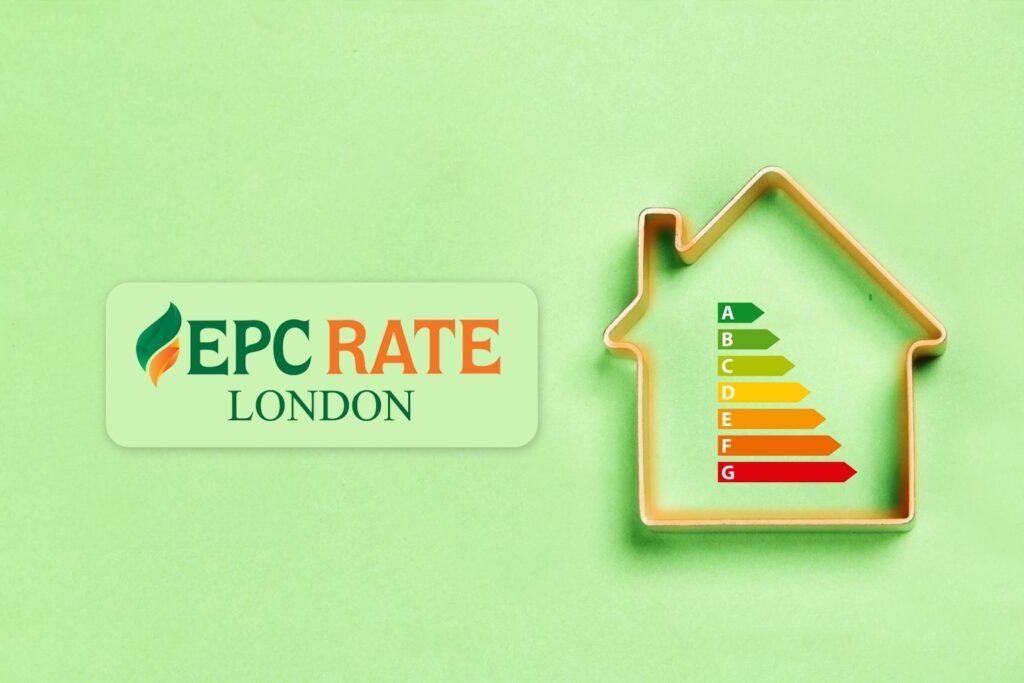
A Commercial Energy Performance Certificate (EPC) measures how energy efficient a non-residential property is, giving it a rating from:
- A (most efficient)
- to
- G (least efficient)
It also includes:
- Estimated energy usage
- Carbon emissions
- Recommendations to improve efficiency
- Potential future rating
What is MEES? (Minimum Energy Efficiency Standards)
MEES is a UK regulation that requires commercial rental properties to meet a minimum energy efficiency standard.
Key Rule:
👉 Properties must have at least an E rating to be legally rented.
MEES Rules for Landlords in 2026
In London and across the UK:
- EPC is required before leasing or marketing
- Minimum E rating mandatory for all leases
- Applies to both new and existing tenancies
- Substandard properties (F or G) cannot be rented unless exempt
What Happens if You Don’t Comply?
Landlords who fail to meet MEES requirements may face:
- Financial penalties
- Public listing of non-compliance
- Restrictions on leasing the property
- Loss of rental income
Commercial EPC Costs for Landlords
Typical costs in 2026:
- Small commercial units: From £145
- Medium buildings: £200–£500
- Large properties: Custom pricing
👉 View pricing: https://epcrate.co.uk/pricing/
What Does an EPC Assessment Include?
An accredited assessor will evaluate:
- Heating and cooling systems (HVAC)
- Lighting efficiency
- Insulation levels
- Ventilation systems
- Building structure and layout
How Landlords Can Improve EPC Ratings
To meet MEES compliance, landlords can:
✔ Upgrade Insulation
Reduce heat loss and improve efficiency
✔ Install Energy-Efficient Lighting
Switch to LED systems
✔ Improve Heating Systems
Upgrade boilers or HVAC systems
✔ Add Renewable Energy
Solar panels or efficient energy solutions
How to Get a Commercial EPC Fast
- Book an accredited EPC assessor
- Schedule an inspection
- Complete property assessment
- Receive certificate within 24–48 hours
👉 Book now: https://epcrate.co.uk/booking/
How Long is a Commercial EPC Valid?
👉 A Commercial EPC is valid for 10 years
When Should Landlords Renew an EPC?
- When the certificate expires
- Before leasing or re-leasing
- After major upgrades (recommended)
Why EPC Compliance Matters for Landlords
✔ Legal Protection
Avoid penalties and enforcement action
✔ Higher Rental Value
Efficient properties attract better tenants
✔ Lower Operating Costs
Reduce energy usage
✔ Future-Proof Investment
Stay ahead of tightening regulations
FAQs for Landlords
Can I rent a property with an F or G rating?
No, unless a valid exemption is registered.
Is MEES applicable to all landlords?
Yes, it applies to most commercial rental properties.
How quickly can I get a Commercial EPC?
Usually within 24–48 hours after inspection.
Final Thoughts
For landlords in 2026, a Commercial EPC is not optional—it’s a legal and financial necessity. Staying compliant ensures:
- Continuous rental income
- Legal security
- Higher property value
📞 Book Your Commercial EPC Today
👉 https://epcrate.co.uk/booking/
👉 https://epcrate.co.uk/contact-us-epc-services-london/
EPCRate Contact Details
150–160 City Road
London, EC1V 2NX
 020 3488 4142
 info@epcrate.co.uk


Written by Jino Jose
DEA & NDEA Accredited Energy Assessor · EPCRATE, London · Founded 2015
Jino Jose is the founder of EPCRATE and one of the few London assessors holding both Domestic Energy Assessor (DEA) and Non-Domestic Energy Assessor (NDEA) accreditations. He has carried out thousands of EPC assessments across all 32 London boroughs since 2015.
Last updated: · About the author →