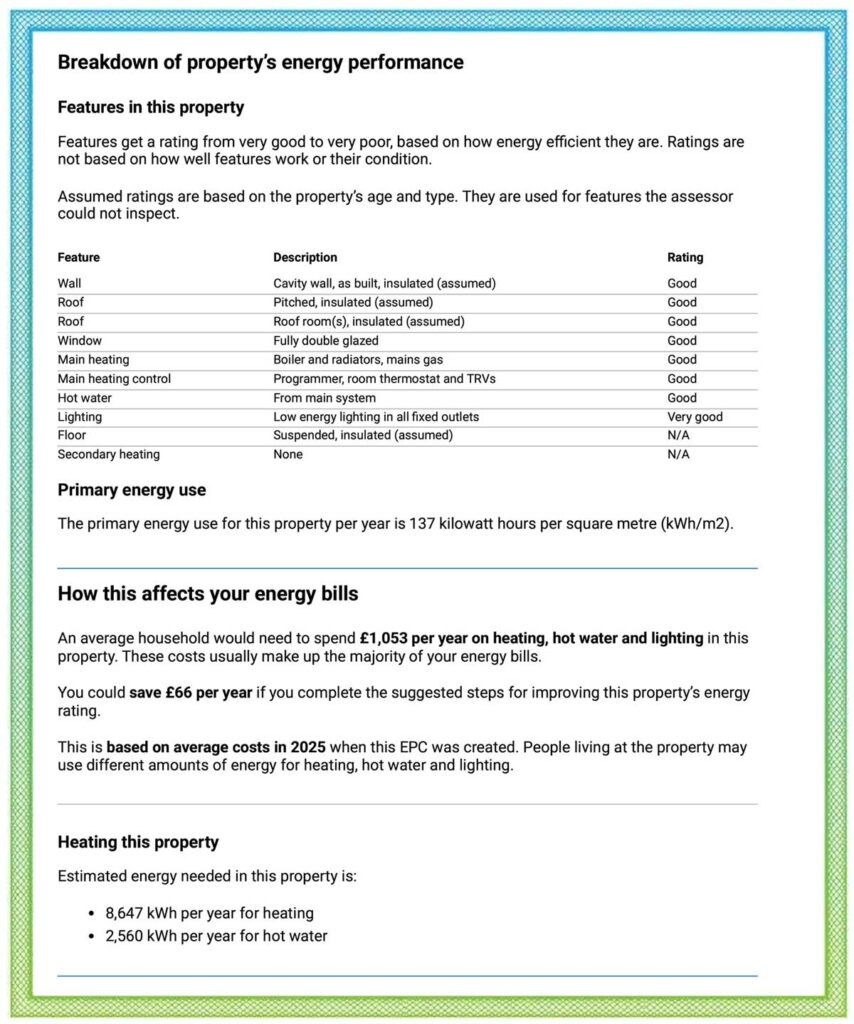
If you’re buying, selling, renting, or managing a property in the UK, you’ve probably come across the term EPC. Short for Energy Performance Certificate, an EPC is an important document that provides information about a property’s energy efficiency and environmental impact.
EPCRATE Services — Quick Links
Whether you’re a homeowner, landlord, tenant, investor, or business owner, understanding how EPCs work can help you make informed decisions about your property. In this complete guide, we’ll explain what an EPC is, why it’s important, when it’s required, and how you can improve your property’s energy rating.
For professional EPC assessments across London, visit:
What Is an EPC?
An Energy Performance Certificate (EPC) is an official document that measures the energy efficiency of a property.
The certificate provides:
- An energy efficiency rating
- Estimated energy costs
- Environmental impact information
- Recommendations for improving efficiency
- Potential future energy rating
The EPC helps buyers, tenants, landlords, and property owners understand how efficiently a building uses energy and where improvements can be made.
What Do EPC Ratings Mean?
Every EPC includes an energy rating ranging from A to G.
| Rating | Energy Efficiency |
|---|---|
| A | Most Efficient |
| B | Very Efficient |
| C | Good |
| D | Average |
| E | Below Average |
| F | Poor |
| G | Least Efficient |
Properties with higher ratings generally consume less energy and have lower running costs.
Why Is an EPC Important?
Energy efficiency is becoming increasingly important for both residential and commercial properties.
An EPC helps:
Homeowners
Understand energy performance and identify improvement opportunities.
Buyers
Compare properties and estimate future energy costs.
Landlords
Meet legal requirements and improve tenant appeal.
Tenants
Gain insight into likely utility expenses.
Businesses
Assess energy efficiency and operational costs.
When Is an EPC Required?
In most cases, an EPC is required when:
Selling a Property
Property owners usually need a valid EPC before marketing a property for sale.
Renting a Property
Landlords generally require an EPC before advertising a property for rent.
Constructing a New Building
Newly built properties often require EPC certification before completion.
Leasing Commercial Property
Commercial landlords typically need a valid EPC before leasing premises.
Types of EPCs
There are two main types of EPCs.
Domestic EPC
A Domestic EPC applies to residential properties, including:
- Houses
- Flats
- Apartments
- Bungalows
- Maisonettes
Domestic EPCs are commonly required for homeowners and residential landlords.
Commercial EPC
A Commercial EPC applies to non-domestic buildings, such as:
- Offices
- Shops
- Restaurants
- Warehouses
- Industrial units
- Hotels
Commercial EPC assessments are often more detailed because business premises may contain complex heating, cooling, and ventilation systems.
How Long Does an EPC Last?
An EPC remains valid for:
10 Years
During this period, the certificate can usually be used multiple times for sales and rental transactions.
However, many property owners choose to obtain a new EPC sooner if they have completed significant energy-efficiency improvements.
What Happens During an EPC Assessment?
An EPC assessment is carried out by a qualified energy assessor.
The assessor reviews key elements that affect energy efficiency.
Building Construction
- Walls
- Roofs
- Floors
Insulation
- Loft insulation
- Wall insulation
- Floor insulation
Heating Systems
- Boilers
- Heat pumps
- Heating controls
Windows and Doors
- Double glazing
- Triple glazing
- Energy-efficient features
Lighting
- Fixed lighting
- Energy-efficient bulbs
The information is entered into approved software to calculate the final EPC rating.
How Long Does an EPC Assessment Take?
The inspection time depends on the property.
Domestic Properties
Most residential assessments take between:
20–60 minutes
Commercial Properties
Commercial inspections may take longer depending on:
- Building size
- Number of floors
- Heating and cooling systems
- Property complexity
How Much Does an EPC Cost?
The cost of an EPC varies depending on:
Domestic EPC Factors
- Property size
- Number of bedrooms
- Location
Commercial EPC Factors
- Floor area
- Building complexity
- HVAC systems
- Building use
For current pricing information, visit:
https://epcrate.co.uk/pricing/
Can You Sell a Property Without an EPC?
In most cases, a valid EPC is required before marketing a property for sale.
Estate agents often request EPC information before listing a property because buyers need access to energy performance data during the sales process.
Obtaining an EPC early can help avoid delays and ensure compliance.
EPC Requirements for Landlords
Landlords have specific responsibilities regarding EPCs.
Most residential rental properties must meet a minimum EPC standard before being legally rented.
A valid EPC must typically be provided to prospective tenants.
Landlords should also monitor EPC expiry dates and consider updating certificates after making energy-efficiency improvements.
What If My Property Has a Low EPC Rating?
A low EPC rating does not prevent a property from being sold.
However, it may:
- Affect buyer perception
- Reduce tenant interest
- Highlight future upgrade requirements
Many property owners choose to improve their ratings before selling or renting.
How to Improve Your EPC Rating
There are several ways to increase a property’s energy efficiency.
Install Loft Insulation
One of the most cost-effective improvements.
Upgrade Heating Systems
Modern boilers and heat pumps often improve energy performance.
Improve Wall Insulation
Reduces heat loss and improves comfort.
Install Double Glazing
Can improve thermal efficiency.
Upgrade Lighting
LED lighting positively contributes to EPC calculations.
Install Solar Panels
Solar PV systems may improve EPC scores while reducing energy bills.
Do Solar Panels Improve EPC Ratings?
In many cases, yes.
Solar photovoltaic (PV) systems generate renewable electricity, reducing a property’s reliance on grid energy.
This can positively affect EPC calculations and potentially improve the overall rating.
Are Any Properties Exempt From EPC Requirements?
Certain properties may qualify for exemptions.
Examples can include:
- Some listed buildings
- Temporary structures
- Places of worship
- Certain small detached buildings
Property owners should verify whether an exemption applies before assuming an EPC is not required.
Why EPC Ratings Matter More Than Ever
Energy efficiency is becoming increasingly important due to:
- Rising energy costs
- Environmental concerns
- Rental regulations
- Buyer expectations
- Sustainability goals
As a result, EPC ratings are playing a larger role in property decisions across the UK.
Frequently Asked Questions
What does EPC stand for?
EPC stands for Energy Performance Certificate.
How long does an EPC last?
An EPC is generally valid for 10 years.
Is an EPC required when selling a house?
In most cases, yes.
Do landlords need an EPC?
Yes, landlords generally require a valid EPC before renting a property.
Can I improve my EPC rating?
Yes. Improvements such as insulation, modern heating systems, double glazing, and solar panels can help.
What is a good EPC rating?
Ratings of A, B, and C are generally considered strong energy-efficiency ratings.
Is a Commercial EPC different from a Domestic EPC?
Yes. Commercial EPCs apply to business properties, while Domestic EPCs apply to residential properties.
Conclusion
An Energy Performance Certificate (EPC) is an essential document for homeowners, landlords, buyers, tenants, and businesses. It provides valuable information about a property’s energy efficiency, running costs, and environmental impact while helping property owners comply with legal requirements. Whether you’re selling a home, renting out a flat, leasing office space, or investing in commercial property, understanding EPCs can help you make smarter property decisions. By improving energy efficiency and maintaining a valid EPC, property owners can enhance marketability, reduce energy costs, and prepare for an increasingly energy-conscious future.
 020 3488 4142


Written by Jino Jose
DEA & NDEA Accredited Energy Assessor · EPCRATE, London · Founded 2015
Jino Jose is the founder of EPCRATE and one of the few London assessors holding both Domestic Energy Assessor (DEA) and Non-Domestic Energy Assessor (NDEA) accreditations. He has carried out thousands of EPC assessments across all 32 London boroughs since 2015.
Last updated: · About the author →